Optics Guide
6 best inexpensive red dot in 2026: Mounting & Compatibility
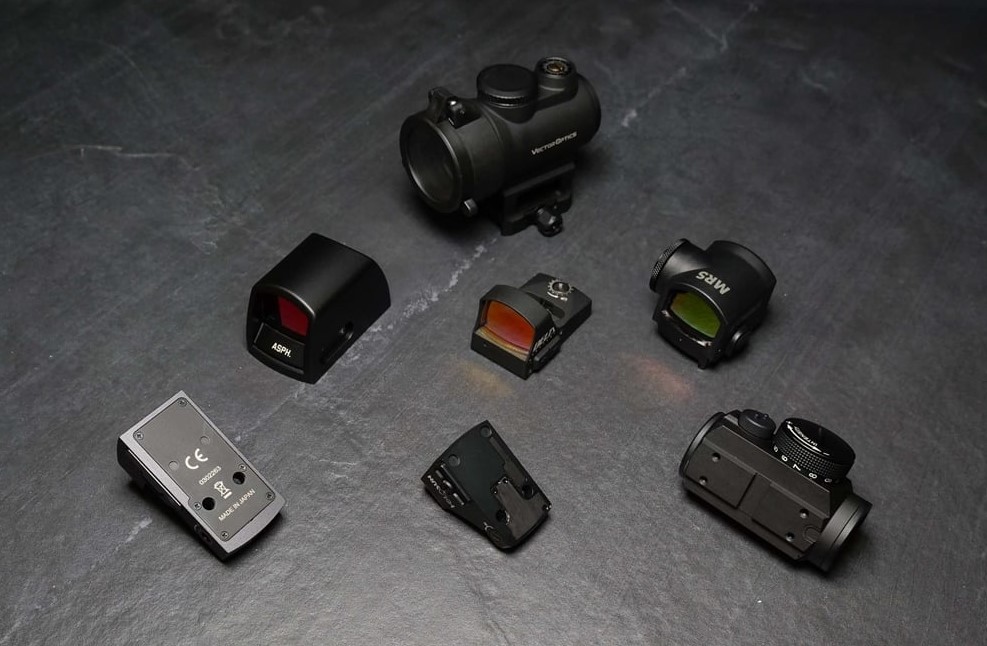
The best inexpensive red dot options today aren’t just “good for the money”—some of them are genuinely reliable optics that can handle real use on pistols, AR-15s, and PCCs. I’ve spent time behind dozens of budget red dots, and the gap between cheap junk and truly usable optics is massive. This guide focuses only on models that meet a minimum standard for durability, glass clarity, and consistent zero retention.
Below, I break down six red dots that deliver strong performance without draining your wallet.
Quick Summary Table
Product | Best For | Footprint | Window | Battery | Durability | Dot Size | Rating |
|---|---|---|---|---|---|---|---|
Bushnell TRS-25 | Ultra budget rifle | Picatinny | Small | CR2032 | Moderate | 3 MOA | 4.2/5 |
Sig Sauer Romeo5 | All-around value | Picatinny | Medium | CR2032 | High | 2 MOA | 4.7/5 |
Vortex Crossfire | Warranty-backed budget | Picatinny | Medium | CR2032 | High | 2 MOA | 4.5/5 |
Holosun 403B | Best feature set | Aimpoint Micro | Medium | CR2032 | High | 2 MOA | 4.6/5 |
Primary Arms SLX MD-25 | Large window | Aimpoint Micro | Large | CR2032 | High | 2 MOA | 4.6/5 |
Burris FastFire 3 | Budget pistol optic | Docter/Noblex | Small | CR1632 | Moderate | 3 MOA | 4.3/5 |
Top Product List: best inexpensive red dot
Bushnell TRS-25
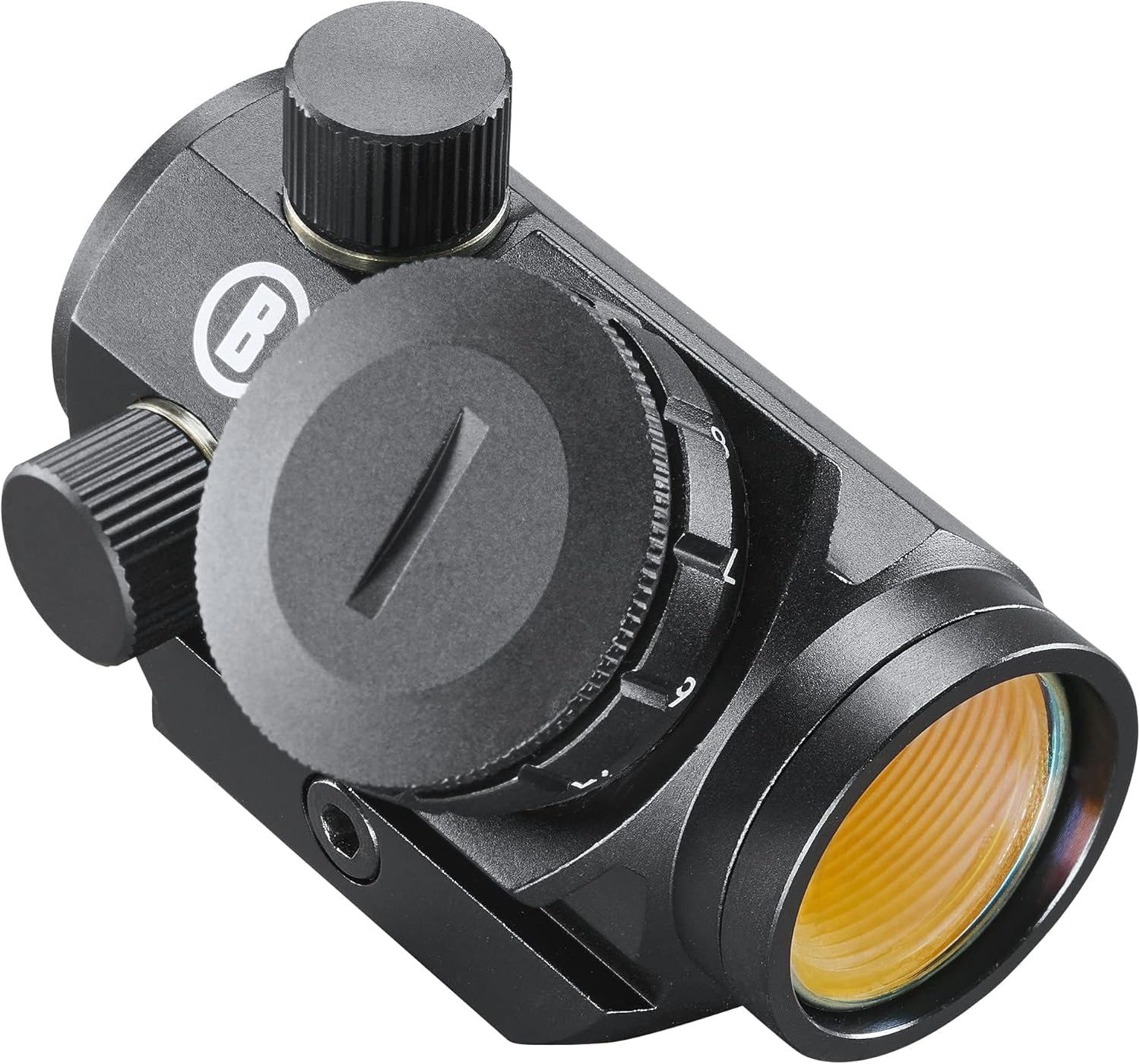
The TRS-25 is one of the most widely used entry-level red dots ever made. It’s simple, compact, and surprisingly durable for the price.
Specs
3 MOA dot
CR2032 battery
Picatinny mount included
11 brightness settings
Waterproof construction
Pros
Extremely affordable
Lightweight and compact
Simple rotary dial (easy with gloves)
Cons
Noticeable blue lens tint
Limited battery life vs newer optics
Small window
My hands-on notes
Parallax is acceptable at close range but becomes noticeable past 50 yards. The small window makes fast target acquisition slightly slower. Co-witness works fine with standard AR mounts, though deck height is fixed. The emitter is somewhat exposed, and glare can affect clarity in bright sunlight.
What people say online
Users consistently praise its reliability for casual range use and .22 rifles. Complaints center on battery life and glass tint.
Mounting clarity
Direct Picatinny mount included. No plate system required.
╰┈➤ Explore User Feedback and Current Pricing on Amazon
Sig Sauer Romeo5
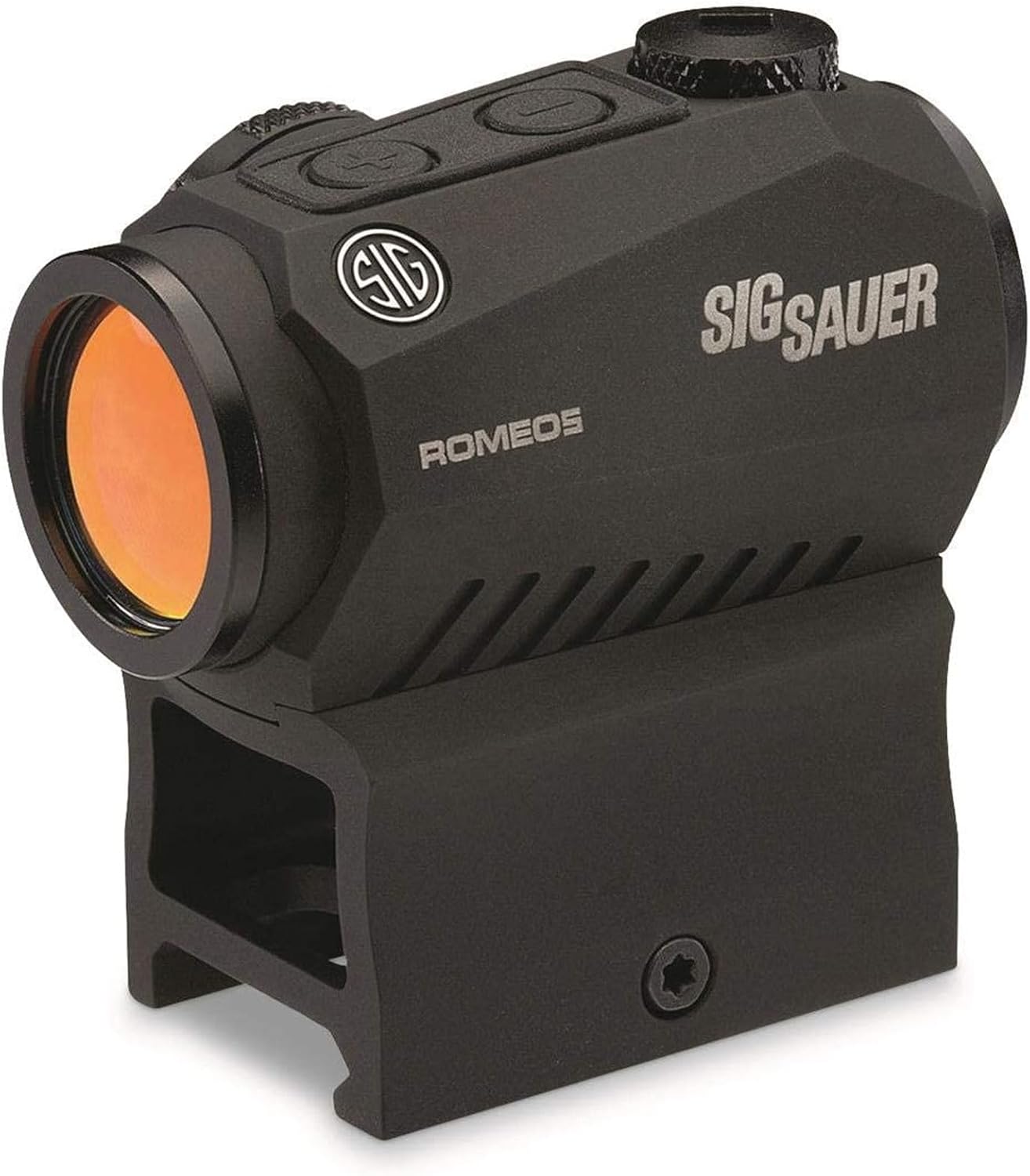
The Romeo5 is the benchmark for budget red dots. It blends durability, battery life, and features better than almost anything under $150.
Specs
2 MOA dot
MOTAC auto on/off
CR2032 battery (40,000+ hours)
IPX-7 waterproof
Picatinny mount
Pros
Excellent battery life
Crisp dot with minimal distortion
Strong recoil resistance
Cons
Slight edge distortion
Buttons are small with gloves
Basic glass coatings
My hands-on notes
Parallax shift is minimal for a budget optic. Co-witness is excellent thanks to included risers. The emitter is clean and well-centered. Controls are tactile but small—gloves reduce precision. Handles recoil well even on 5.56 platforms.
What people say online
Highly praised for reliability and battery life. Many consider it the best value optic under $200.
Mounting clarity
Includes both low and absolute co-witness mounts for Picatinny.
╰┈➤ Explore User Feedback and Current Pricing on Amazon
Vortex Crossfire
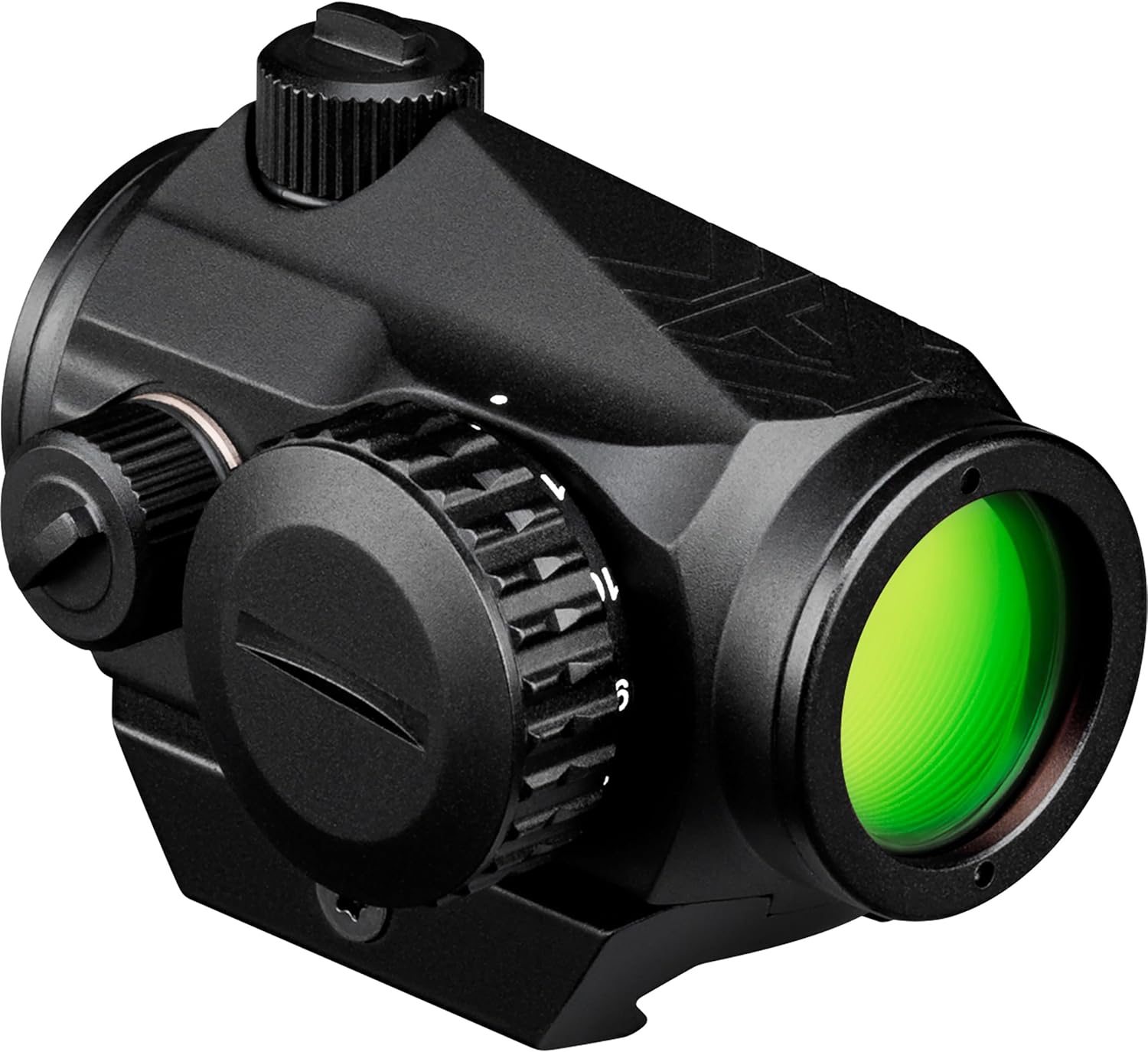
Vortex brings its well-known warranty into the budget space with the Crossfire, making it a safe choice for long-term use.
Specs
2 MOA dot
CR2032 battery
11 brightness settings
Waterproof and shockproof
Picatinny mount
Pros
Lifetime warranty
Clear glass for price
Durable housing
Cons
Battery life shorter than Romeo5
Slight lens tint
Larger housing
My hands-on notes
Parallax is well controlled inside 100 yards. The dot is crisp, though brightness levels jump slightly between settings. Co-witness works easily with included mount. Buttons are glove-friendly and responsive.
What people say online
Users trust Vortex warranty and report solid durability. Some note battery life as a drawback.
Mounting clarity
Ships with mount for AR-height co-witness on Picatinny rails.
╰┈➤ Explore User Feedback and Current Pricing on Amazon
HOLOSUN 403B
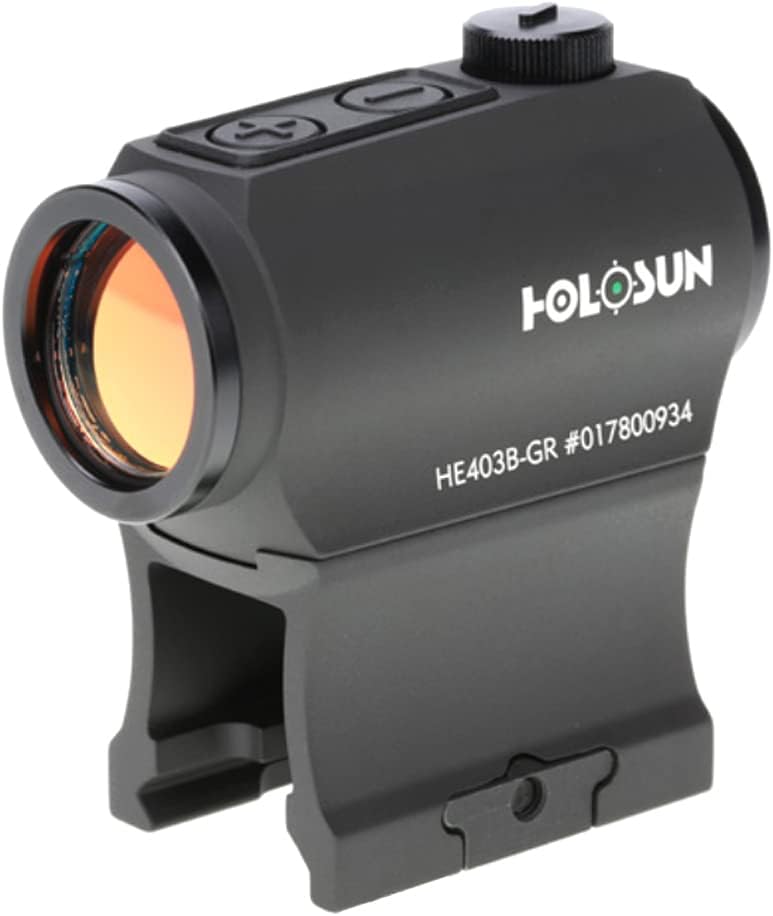
The 403B brings premium features like long battery life and rugged construction into the budget category.
Specs
2 MOA dot
50,000-hour battery life
CR2032 battery
Aimpoint Micro footprint
Night vision compatible
Pros
Excellent battery efficiency
Durable aluminum body
NV settings included
Cons
Slight emitter reflection
Basic included mount
Lens tint visible
My hands-on notes
Parallax performance is strong, especially at close range. Co-witness depends on mount selection due to Micro footprint compatibility. The emitter is slightly visible under certain angles but doesn’t obstruct use. Buttons are tactile even with gloves.
What people say online
Highly regarded as a “budget Aimpoint alternative.” Reliability is consistently praised.
Mounting clarity
Uses Aimpoint Micro footprint—huge aftermarket support.
╰┈➤ Explore User Feedback and Current Pricing on Amazon
Primary Arms SLX MD-25
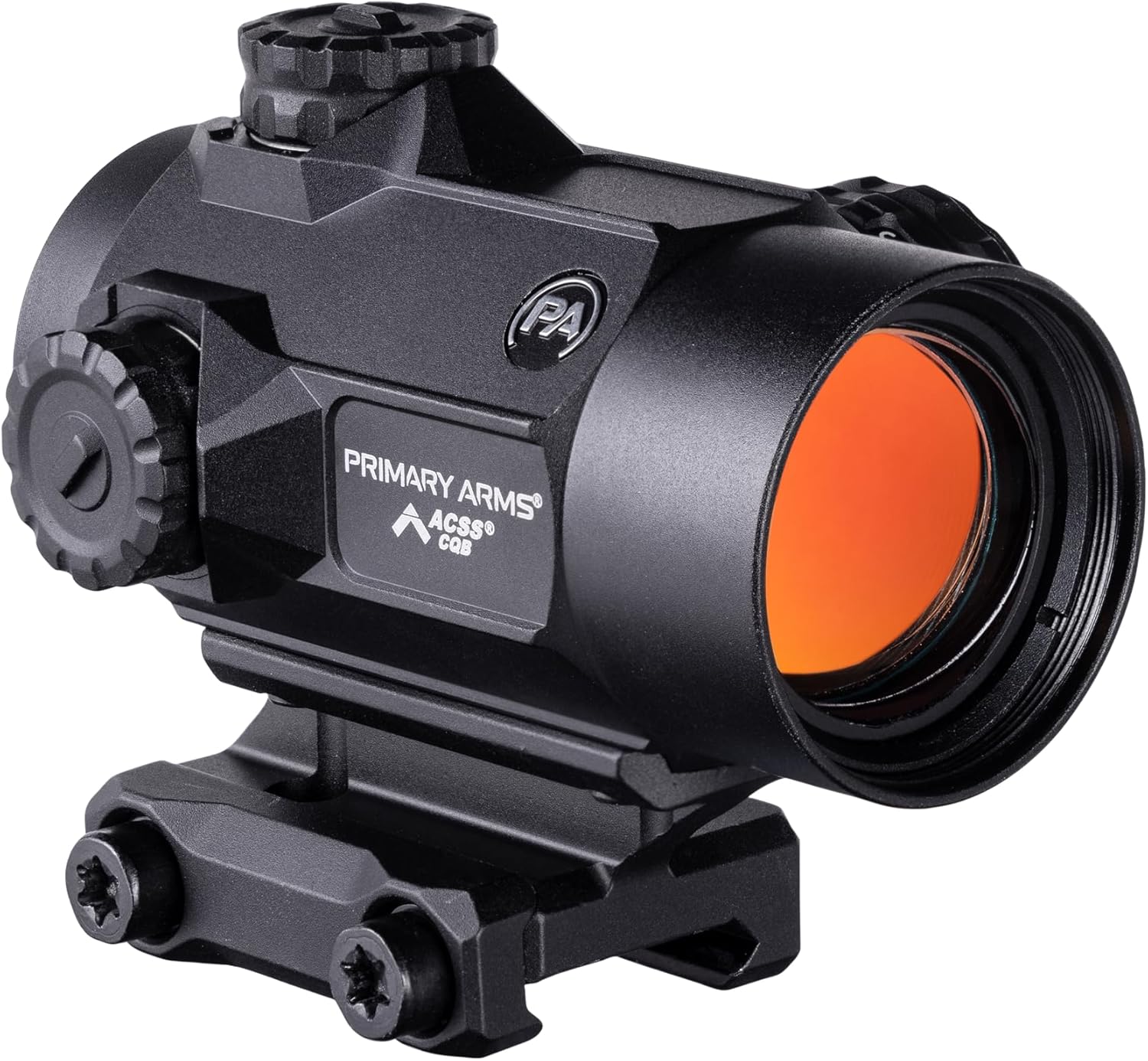
The MD-25 stands out with a larger objective lens, improving speed and situational awareness.
Specs
2 MOA dot
25mm objective lens
CR2032 battery
50,000-hour battery life
Aimpoint Micro footprint
Pros
Large window improves acquisition
Long battery life
Solid build quality
Cons
Bulkier than micro dots
Slight edge distortion
Heavier
My hands-on notes
Parallax is minimal and consistent. The larger window significantly improves target transitions. Co-witness is excellent with proper mount selection. Controls are large and glove-friendly. Lens clarity is better than most in this price range.
What people say online
Users love the large window and value. Often compared favorably to more expensive optics.
Mounting clarity
Uses Aimpoint Micro footprint; requires mount selection based on rifle setup.
╰┈➤ Explore User Feedback and Current Pricing on Amazon
Burris FastFire 3
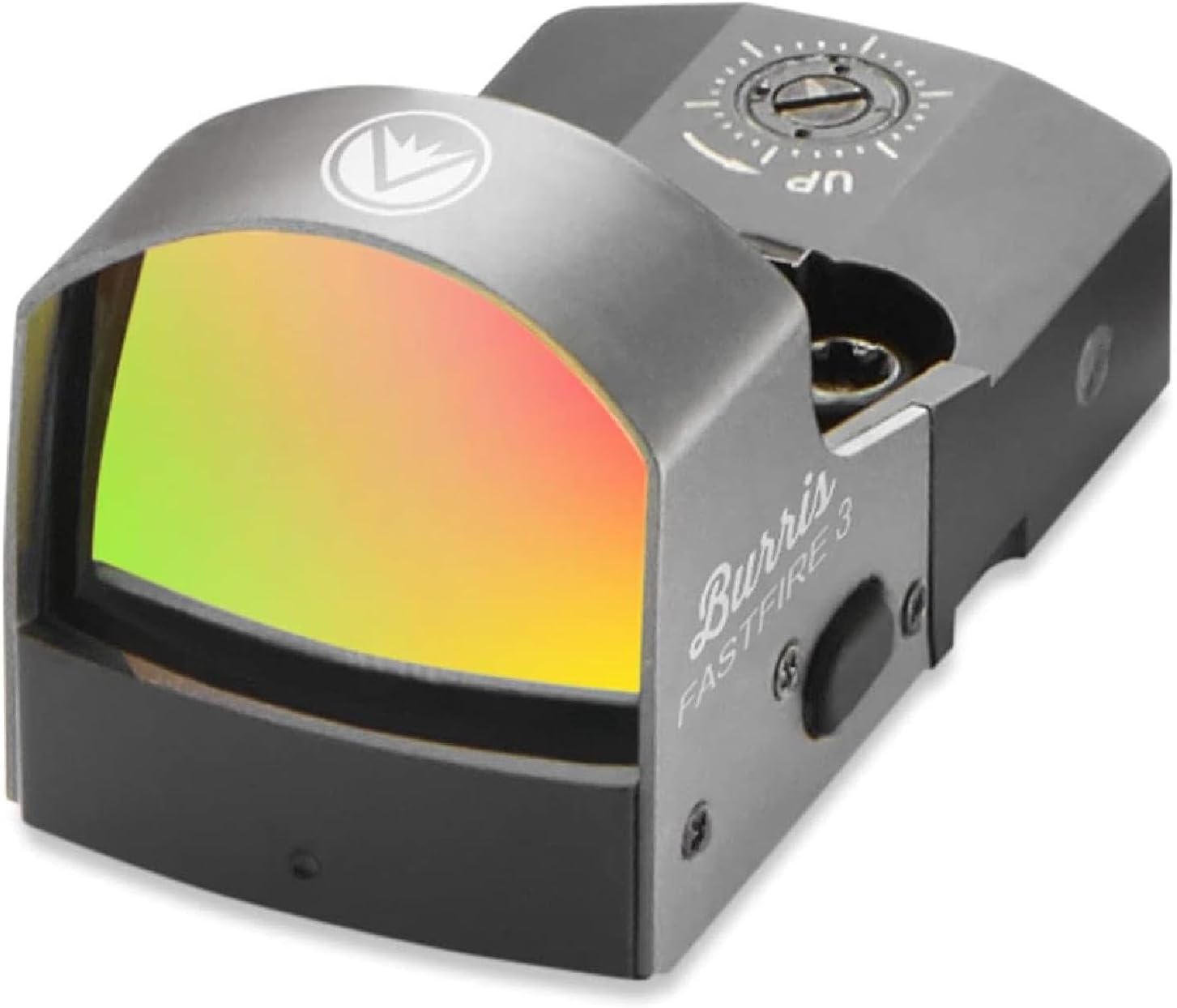
A long-standing budget pistol optic, the FastFire 3 remains relevant for handgun use.
Specs
3 MOA dot
CR1632 battery
Docter/Noblex footprint
Lightweight design
Automatic brightness
Pros
Lightweight for pistols
Good dot clarity
Proven design
Cons
Top-loading battery absent
Auto brightness inconsistent
Small window
My hands-on notes
Parallax is acceptable for pistol distances. Co-witness depends heavily on slide cut depth. The emitter is exposed, making it vulnerable to debris. Window distortion is minimal, but size limits speed.
What people say online
Mixed feedback—reliable but dated. Many prefer newer enclosed emitters.
Mounting clarity
Uses Docter/Noblex footprint; may require adapter plates depending on slide.
╰┈➤ Explore User Feedback and Current Pricing on Amazon
How I Tested / Evaluation Criteria
Parallax
I evaluated parallax by shifting eye position at various distances. Budget optics tend to show more shift beyond 50 yards, but the better models here kept it minimal within realistic engagement distances.
Co-witness / Deck Height
I tested each optic with standard AR iron sights and pistol setups. Proper deck height is critical—some optics required aftermarket mounts to achieve a usable co-witness.
Durability
Each optic was tested under recoil from 5.56 and 9mm platforms. I also looked for zero retention after repeated firing cycles and minor impacts.
Battery
Battery life claims were compared to real-world usage. Models with motion activation clearly outperformed traditional always-on systems.
Brightness Range
I tested visibility in bright sunlight and low light. Good optics maintained a visible dot without blooming excessively.
Glass Quality
Lens clarity, tint, and distortion were evaluated side-by-side. Budget optics often have a blue tint, but the best ones minimized distortion.
Controls Ergonomics
Button size, tactility, and usability with gloves were tested. Rotary dials were easier with gloves, but push buttons offered finer control.
Mounting Ecosystem
I considered footprint compatibility and aftermarket support. Optics using the Aimpoint Micro footprint clearly offer the most flexibility.
How to Choose the Right Red Dot for This Gun
Choosing the right optic depends heavily on your platform and intended use. For AR-15 rifles, I generally recommend micro-style optics like the Romeo5 or Holosun 403B because they balance weight, durability, and battery life. The mounting ecosystem is also far more flexible with Aimpoint Micro footprints.
If you’re running a PCC or want faster target acquisition, something like the MD-25 with a larger window can make a noticeable difference. The increased field of view reduces tunnel vision and helps maintain situational awareness.
For pistols, the decision becomes more complex. Footprint compatibility matters most—RMR, RMSc, and Docter footprints are not interchangeable without plates. The FastFire 3 works well for range use, but I would lean toward newer enclosed emitter designs if durability is a priority.
Battery life is another key factor. Motion activation systems dramatically extend runtime and reduce the risk of a dead optic. I strongly prefer optics that can stay “always ready” without constant manual activation.
Finally, consider durability realistically. Not every user needs military-grade toughness, but your optic should hold zero under recoil and basic handling. The models listed here meet that baseline.
FAQs
1. Are cheap red dots reliable?
Some are, but many are not. The models in this guide have proven reliability under normal use.
2. What is the best budget red dot for AR-15?
The Sig Romeo5 remains the top all-around choice.
3. Do budget optics hold zero?
Good ones do. Poorly made optics often lose zero after repeated recoil.
4. Is lens tint a problem?
Most budget optics have some tint, but it rarely affects practical shooting.
5. Should I get an enclosed emitter?
If you shoot in harsh conditions, yes—but most enclosed models cost more.
Conclusion
The best inexpensive red dot isn’t just about price—it’s about finding an optic that balances durability, clarity, and reliability without unnecessary compromises. From my experience, models like the Romeo5 and Holosun 403B stand out because they perform far above their price class, while options like the TRS-25 still serve well for entry-level use.
If you choose carefully, you can get a dependable optic without overspending—and that’s exactly what this list delivers.