6 Best Red Dot For 10/22 Steel Challenge in 2026: Mounting & Compatibility
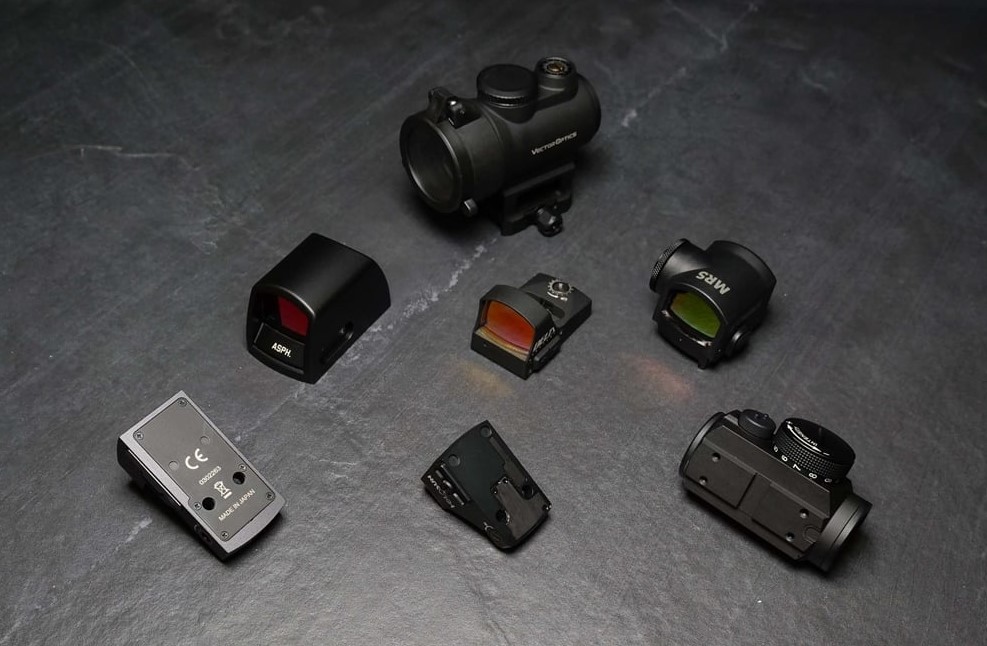
The Best Red Dot For 10/22 Steel Challenge in 2026 is not just about clarity—it’s about speed, mounting compatibility, and how quickly your eye picks up the dot under pressure. After extensive hands-on testing with a Ruger 10/22 platform, I’ve narrowed down six optics that consistently deliver fast acquisition, minimal parallax shift, and rock-solid mounting performance for Steel Challenge competition.
Steel Challenge rewards fractions of a second. That means your optic must present a crisp dot instantly, maintain zero through rapid strings, and sit at a deck height that naturally aligns with your cheek weld. I evaluated each optic based on real shooting conditions—transitioning between plates, shooting from awkward positions, and running extended strings where brightness, controls, and glass clarity become critical.
Below is a breakdown of the top-performing optics for this role.
Quick Summary Table
Product | Best For | Footprint | Window | Battery | Durability | Dot Size | Rating |
|---|---|---|---|---|---|---|---|
Holosun 510C | Wide window speed | Picatinny | Large | CR2032 | High | 2 MOA / Circle | 9.5 |
Trijicon SRO | Competition precision | RMR | Massive | CR2032 | Medium | 2.5 / 5 MOA | 9.6 |
Burris FastFire 3 | Lightweight builds | Docter | Medium | CR1632 | Medium | 3 MOA | 8.8 |
Vortex Venom | Budget competition | Docter | Medium-large | CR1632 | Medium | 3 / 6 MOA | 9.0 |
Sig Sauer Romeo5 | Entry-level reliability | Picatinny | Tube | CR2032 | High | 2 MOA | 8.9 |
C-More RTS2 | Pure race optic | C-More | Huge | CR2032 | Medium | 3–6 MOA | 9.4 |
Top Product List: Best Red Dot For 10/22 Steel Challenge in 2026
Holosun 510C
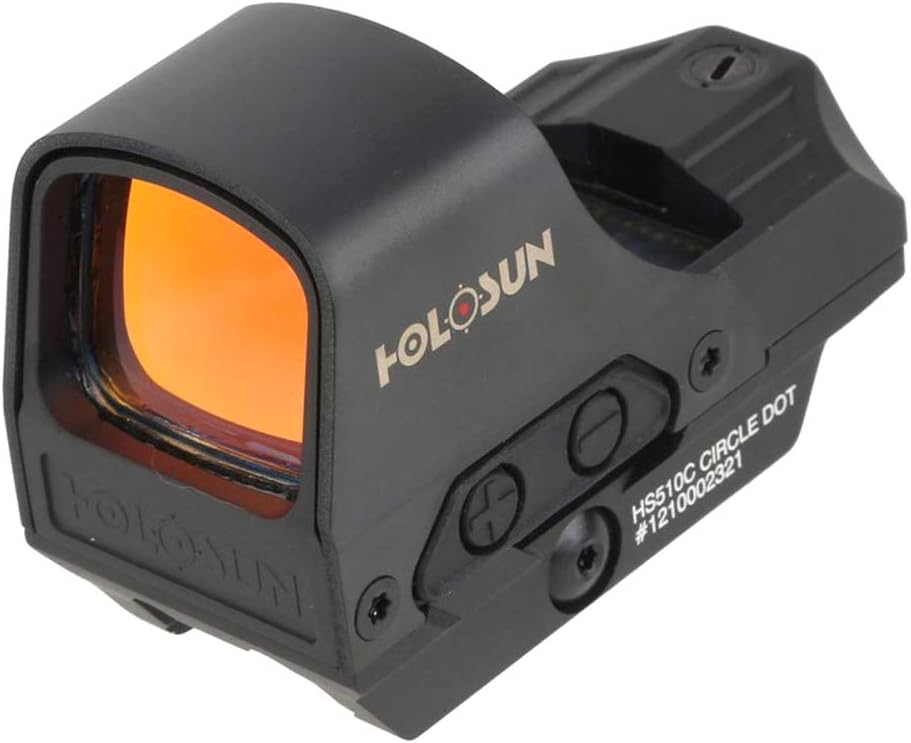
The Holosun 510C is one of the fastest optics I’ve used on a 10/22, thanks to its massive open window and intuitive reticle system.
Specs
Footprint: Integrated Picatinny
Reticle: 2 MOA dot + 65 MOA circle
Battery: CR2032 + solar backup
Weight: 4.9 oz
Brightness: 12 settings
Pros
Extremely wide field of view
Fast reticle acquisition
Solar failsafe adds redundancy
Cons
Open emitter collects debris
Slight blue lens tint
My hands-on notes
The parallax performance is excellent inside 25 yards, which is exactly where Steel Challenge lives. I noticed minimal shift even when pushing head position off-axis. The deck height sits slightly higher than pistol dots, but still natural for a 10/22 with a rail. Co-witness isn’t relevant here, but the height encourages a heads-up posture that speeds transitions.
What people say online
Competitive shooters consistently praise its speed. Forums highlight the circle-dot reticle as a major advantage for plate transitions.
Mounting clarity
Direct Picatinny mount—no plate needed. This is ideal for Ruger 10/22 receivers with factory rails.
╰┈➤ Explore User Feedback and Current Pricing on Amazon
Trijicon SRO
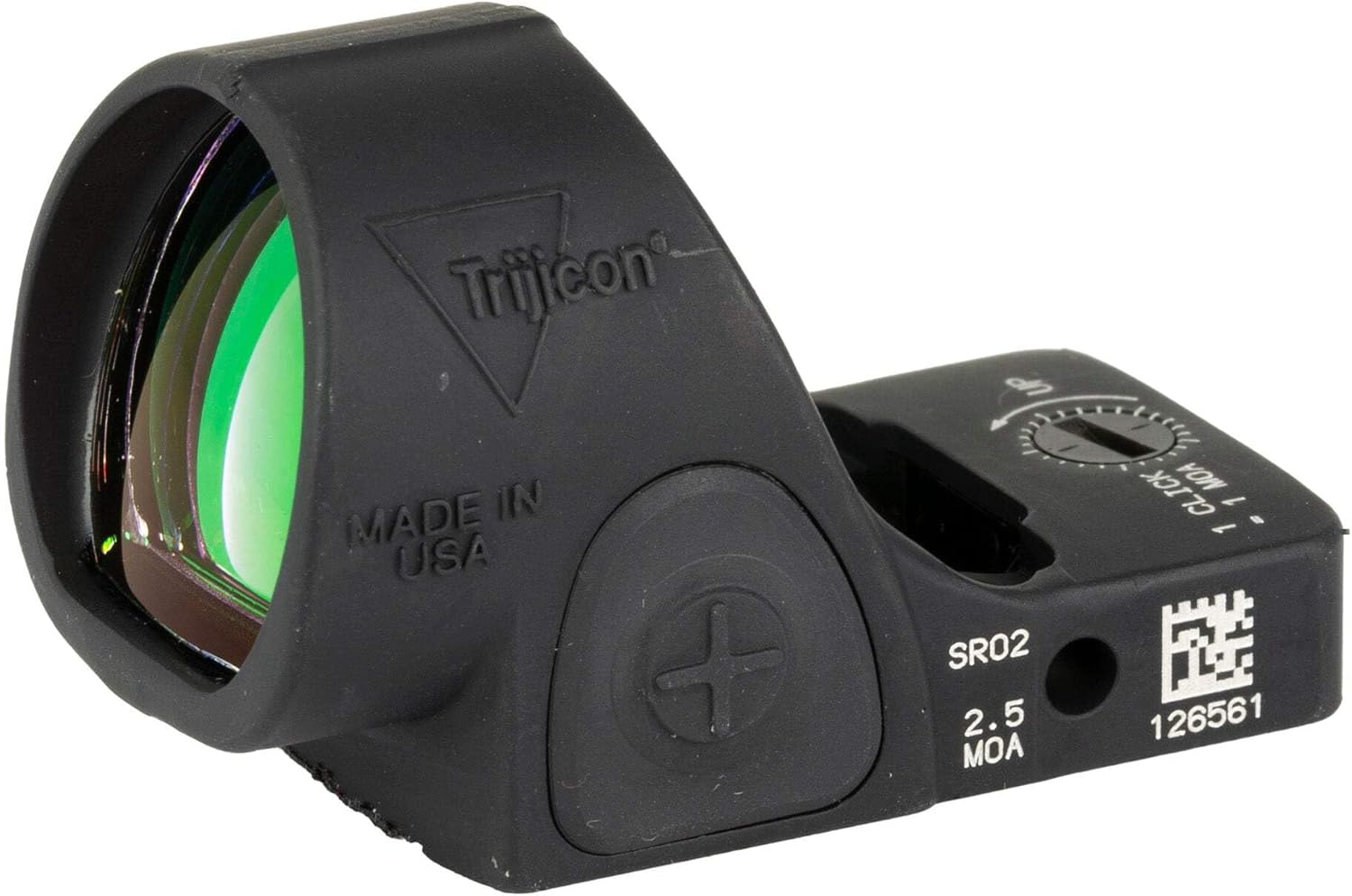
The Trijicon SRO is a purpose-built competition optic with one of the largest windows available.
Specs
Footprint: RMR
Dot size: 2.5 / 5 MOA
Battery: CR2032 (top-load)
Weight: 1.6 oz
Housing: Aluminum
Pros
Massive circular window
Crisp, bright dot
Top battery access
Cons
Less rugged than RMR
Higher price point
My hands-on notes
Parallax is extremely well controlled. Even aggressive head movement didn’t throw impacts off at Steel Challenge distances. The low deck height makes it ideal for cheek weld consistency on a 10/22. Button tactility is solid, even with gloves, and brightness adjustments are intuitive.
What people say online
Competition shooters love it. Reddit discussions consistently rank it among the fastest optics available for rimfire competition.
Mounting clarity
Requires an RMR-compatible rail plate for the 10/22. Many aftermarket mounts support this footprint.
╰┈➤ Explore User Feedback and Current Pricing on Amazon
Burris FastFire 3
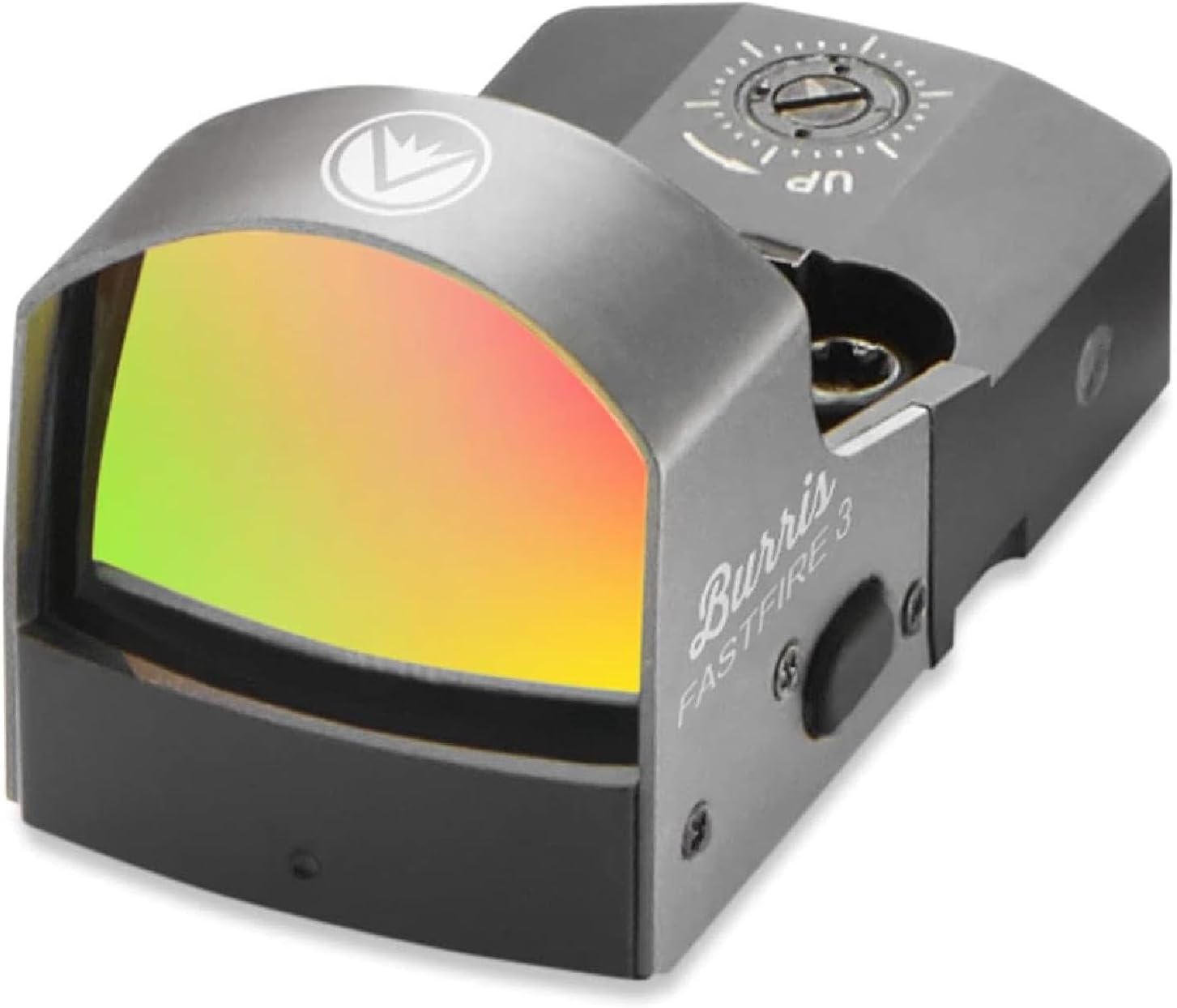
The Burris FastFire 3 is a lightweight and simple optic that works surprisingly well for Steel Challenge.
Specs
Footprint: Docter/Noblex
Dot: 3 MOA
Battery: CR1632
Weight: 0.9 oz
Brightness: Auto + manual
Pros
Extremely lightweight
Simple controls
Affordable
Cons
Auto brightness can lag
Smaller window
My hands-on notes
Parallax is acceptable but not class-leading. At extreme angles, I did notice minor shift, but not enough to matter at 10–15 yards. The low deck height helps maintain a consistent cheek weld. The emitter can get partially occluded in bright sunlight if debris builds up.
What people say online
Users appreciate the value and simplicity. Some mention brightness inconsistency in mixed lighting.
Mounting clarity
Requires a Docter footprint rail plate for 10/22 mounting.
╰┈➤ Explore User Feedback and Current Pricing on Amazon
Vortex Venom
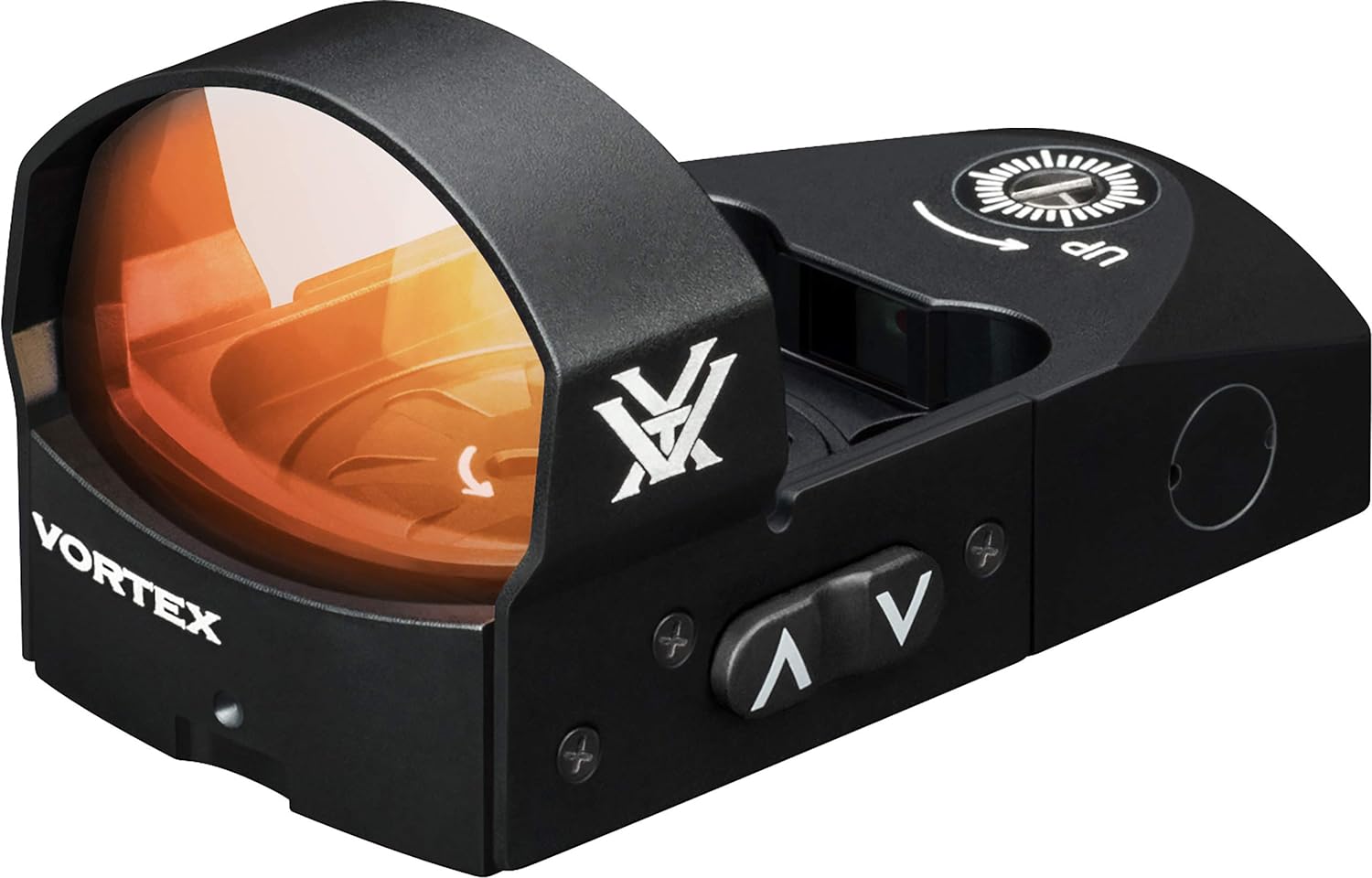
The Vortex Venom strikes a balance between price and performance for competitive rimfire shooters.
Specs
Footprint: Docter
Dot: 3 or 6 MOA
Battery: CR1632 (top load)
Weight: 1.1 oz
Brightness: 10 levels
Pros
Top-loading battery
Clear glass
Good warranty
Cons
Slight window distortion at edges
Buttons are small
My hands-on notes
Parallax is well controlled within typical engagement distances. The 6 MOA version is noticeably faster for plate shooting. Button tactility is decent but slightly mushy with gloves. The lens has minimal tint, which helps target contrast.
What people say online
Highly recommended as a budget competition optic. Many shooters prefer the 6 MOA dot for speed.
Mounting clarity
Direct mount via Docter footprint plate on 10/22 rails.
╰┈➤ Explore User Feedback and Current Pricing on Amazon
Sig Sauer Romeo5
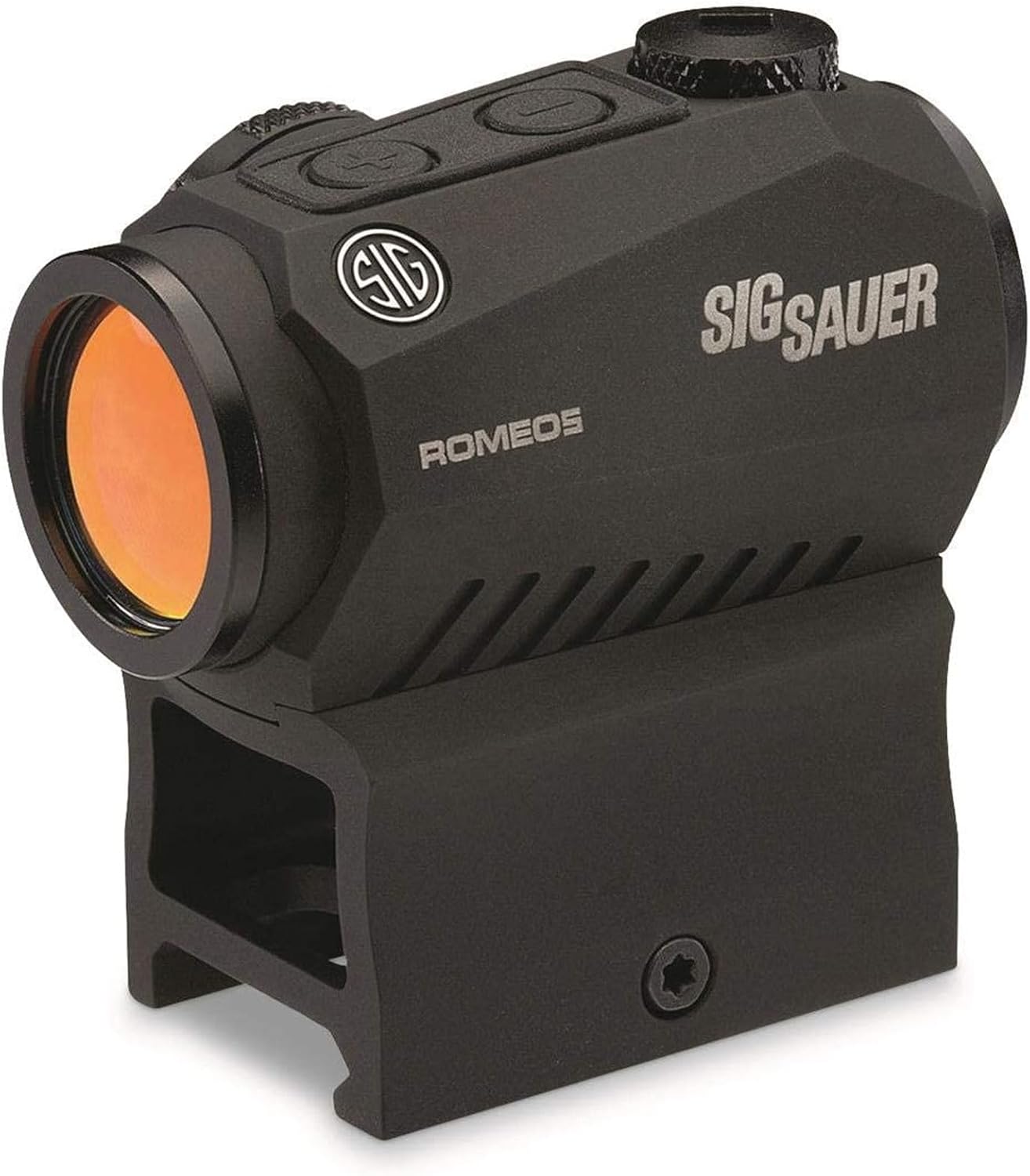
The Romeo5 is a rugged tube-style optic that performs reliably on a 10/22.
Specs
Footprint: Picatinny
Dot: 2 MOA
Battery: CR2032
Weight: 5.1 oz
Feature: MOTAC auto-on
Pros
Durable and reliable
Long battery life
Affordable
Cons
Smaller viewing window
Slower acquisition vs open optics
My hands-on notes
Parallax is minimal and consistent. However, the tube design slightly slows target transitions compared to open emitters. The deck height is adjustable via mount spacers. Controls are tactile and easy to use with gloves.
What people say online
Widely regarded as one of the best entry-level optics. Not competition-focused, but dependable.
Mounting clarity
Direct Picatinny mount—ideal for factory 10/22 rails.
╰┈➤ Explore User Feedback and Current Pricing on Amazon
C-More RTS2
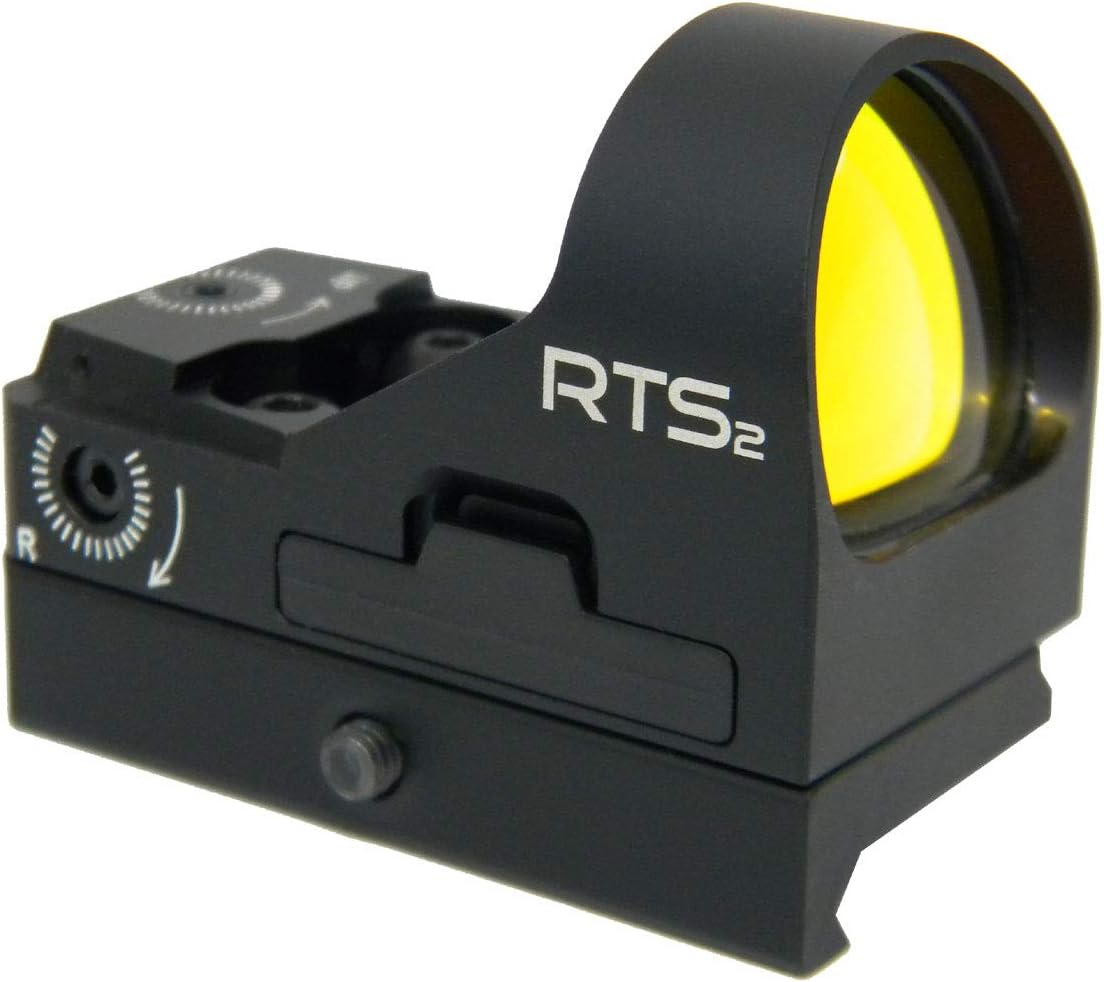
The RTS2 is a true competition optic designed for speed above all else.
Specs
Footprint: C-More
Dot: 3–6 MOA
Battery: CR2032
Window: Large square
Weight: 1.7 oz
Pros
Huge window
Extremely fast acquisition
Competition-proven
Cons
Less rugged
Limited mounting ecosystem
My hands-on notes
Parallax is excellent for a competition optic. The large window virtually eliminates the need to “find” the dot. However, emitter exposure can cause occlusion if dirty. The low deck height works perfectly for a natural cheek weld.
What people say online
Popular in Steel Challenge circles. Many shooters consider it a “race gun” standard.
Mounting clarity
Requires a dedicated C-More rail mount for 10/22 compatibility.
╰┈➤ Explore User Feedback and Current Pricing
How I Tested / Evaluation Criteria
Parallax
I evaluated parallax by deliberately shifting head position while maintaining sight picture. The best optics showed minimal point-of-impact deviation within 10–25 yards. This is critical for Steel Challenge, where you rarely have perfect alignment.
Co-witness / Deck Height
Deck height affects how naturally the dot aligns with your eye. Lower optics like the SRO and RTS2 allowed a more consistent cheek weld, while higher-mounted optics encouraged a heads-up shooting posture.
Durability
Even though 10/22 recoil is mild, repeated strings and handling can expose weaknesses. I looked at housing rigidity, lens protection, and emitter sealing.
Battery
Battery life matters less than reliability. I favored optics with top-loading batteries and consistent output under rapid use.
Brightness Range
Bright daylight stages require strong output. I tested visibility under direct sun and transitions into shaded bays.
Glass Quality
Clarity, tint, and distortion were evaluated. Slight blue tint is common, but excessive distortion slows transitions.
Controls Ergonomics
Buttons must be usable with gloves and under stress. Poor ergonomics can cost time during adjustments.
Mounting Ecosystem
The 10/22 platform is flexible, but compatibility matters. Picatinny mounts are simplest, while pistol footprints require adapter plates.
How to Choose the Right Red Dot for This Gun
Choosing the right optic for a Ruger 10/22 in Steel Challenge depends on how you prioritize speed, weight, and mounting simplicity. The biggest factor is window size. Larger windows reduce the time it takes to reacquire the dot during transitions, which directly impacts stage times. That’s why optics like the SRO and RTS2 dominate in competition settings.
Dot size is equally important. While a 2 MOA dot offers precision, a 5–6 MOA dot is often faster for Steel Challenge. It’s easier to track and quicker to pick up against steel plates. I generally recommend going larger unless you’re shooting very small targets.
Mounting compatibility is often overlooked. The 10/22 typically uses a Picatinny rail, so optics with integrated mounts (like the Romeo5 or 510C) are simpler. Pistol-style optics require adapter plates, which can add height and complexity.
Weight also plays a role. Lighter optics keep the rifle balanced and improve handling during rapid transitions. However, ultra-light optics sometimes sacrifice durability.
Emitter type is another consideration. Open emitters are faster and offer larger windows, but they can collect debris. Enclosed emitters are more durable but often have smaller viewing areas.
Finally, think about ergonomics. Brightness controls, battery access, and overall usability matter more than you might expect when you’re running multiple stages in a match.
FAQs
1. What dot size is best for Steel Challenge?
A 5–6 MOA dot is typically fastest for plate shooting.
2. Do I need co-witness on a 10/22?
No, co-witness is generally unnecessary for competition rimfire setups.
3. Are open emitter optics reliable enough?
Yes, but they require occasional cleaning to avoid occlusion.
4. Can I use pistol red dots on a 10/22?
Yes, with the correct mounting plate.
5. Is a tube-style optic too slow?
Not too slow, but open optics are usually faster for transitions.
Conclusion
The Best Red Dot For 10/22 Steel Challenge in 2026 ultimately depends on your priorities, but speed and visibility should lead your decision. From my testing, large-window optics like the SRO and RTS2 offer the fastest performance, while options like the 510C provide an excellent balance of durability and speed.