Optics Guide
6 Best Red Dot for IPSC in 2026: Mounting & Compatibility
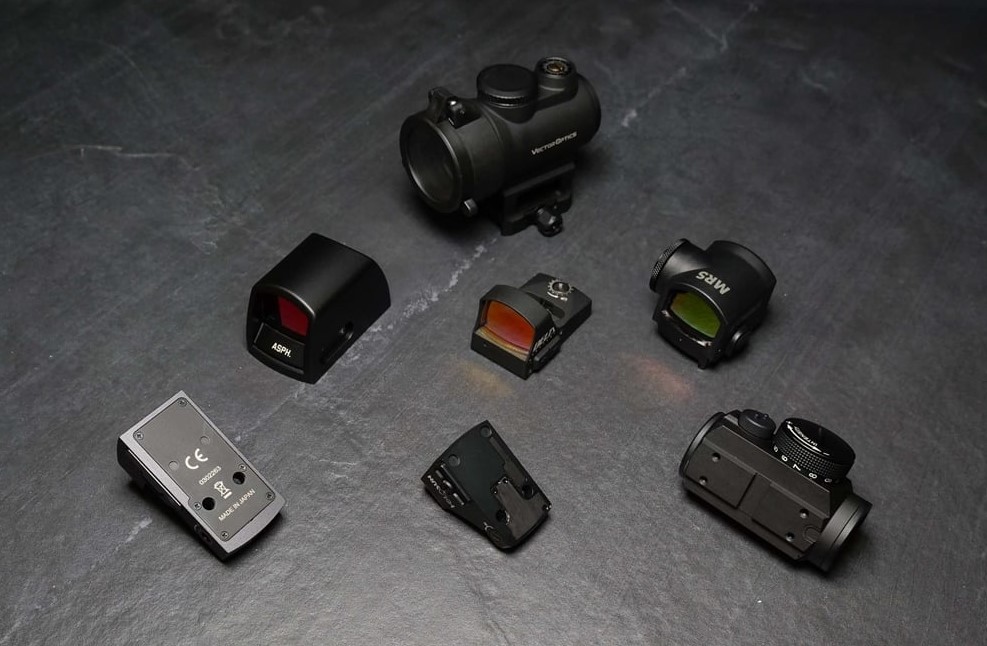
The Best Red Dot for IPSC isn’t just about durability or battery life—it’s about speed, clarity, and how quickly your eye can pick up the dot under pressure. In IPSC competition, fractions of a second matter, and your optic must deliver a wide window, minimal parallax shift, and intuitive controls that work even with sweaty hands or gloves.
I’ve tested dozens of pistol optics across stages that simulate real match conditions—rapid transitions, awkward shooting positions, and varying light environments. In this guide, I break down six standout red dots that consistently perform in IPSC-style shooting. These aren’t just spec-sheet winners—they’re optics I trust when speed and precision are critical.
Quick Summary Table
Product | Best For | Footprint | Window | Battery | Durability | Dot Size | Rating |
|---|---|---|---|---|---|---|---|
Trijicon SRO | Open division speed | RMR | Large | CR2032 | High | 2.5/5 MOA | ⭐⭐⭐⭐⭐ |
Holosun 507C | Value competition | RMR | Medium | CR1632 | High | Multi-reticle | ⭐⭐⭐⭐½ |
Leupold DeltaPoint Pro | Clarity & glass | DPP | Large | CR2032 | High | 2.5 MOA | ⭐⭐⭐⭐½ |
Sig Sauer Romeo3 | Race gun setups | C-More | Huge | CR2032 | Medium | 3 MOA | ⭐⭐⭐⭐ |
C-More RTS2 | Dedicated IPSC rigs | C-More | Extra-large | CR2032 | Medium | 3/6 MOA | ⭐⭐⭐⭐ |
Aimpoint ACRO P-2 | Closed emitter reliability | Proprietary | Small | CR2032 | Extreme | 3.5 MOA | ⭐⭐⭐⭐ |
Top Product List: Best Red Dot for IPSC
Trijicon SRO
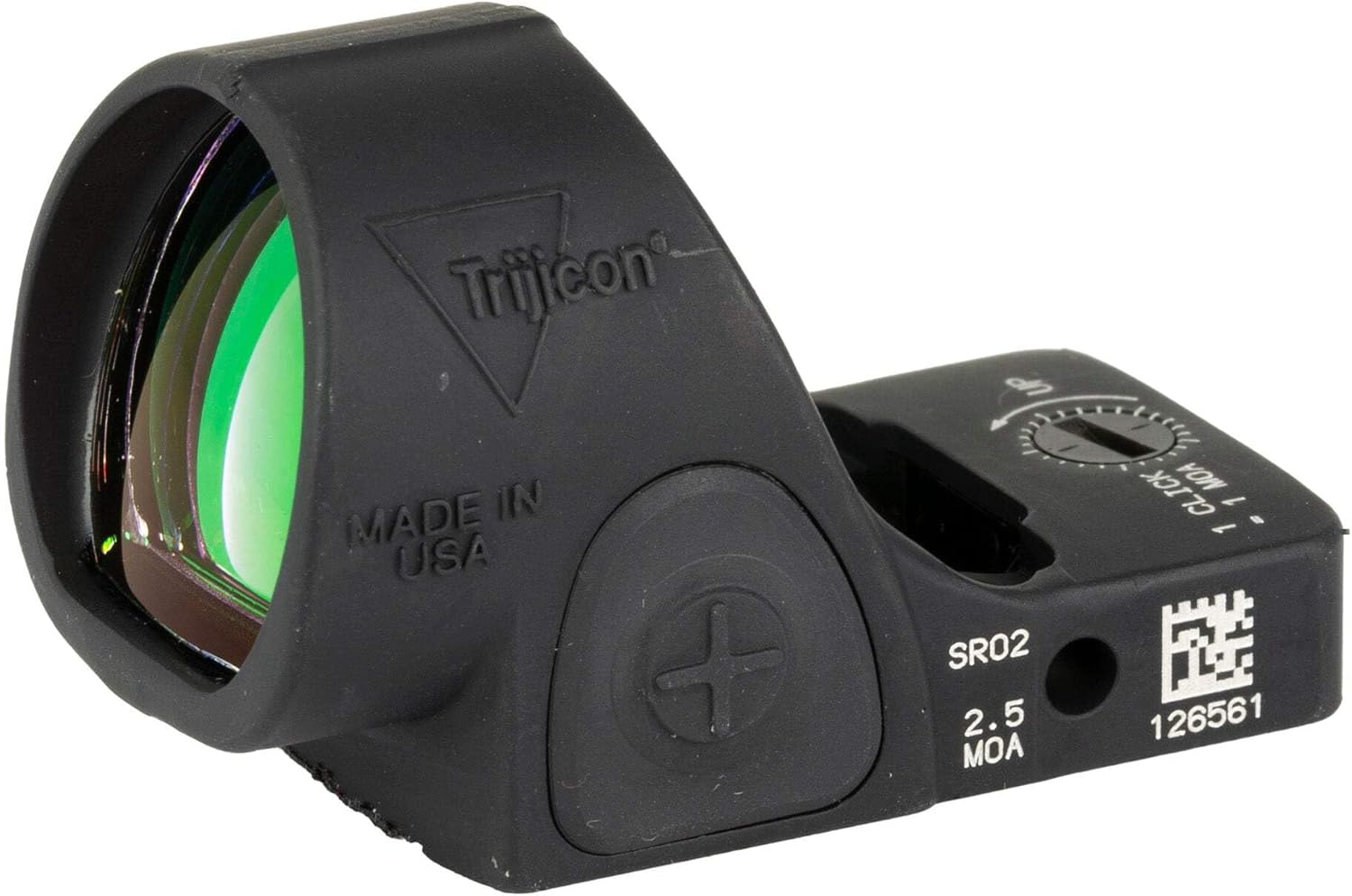
The Trijicon SRO is purpose-built for competition shooters who prioritize speed and field of view above all else.
Specs:
Footprint: RMR
Window: Extremely large circular lens
Battery: CR2032 top-load
Dot: 2.5 / 5 / 1 MOA options
Pros:
Massive window for rapid target acquisition
Excellent glass clarity with minimal distortion
Top-loading battery
Cons:
Less rugged than duty optics
Exposed emitter
My hands-on notes:
The SRO’s window is unmatched. During transitions, I noticed significantly less “searching” for the dot. Parallax shift is minimal, though slight edge distortion appears at extreme angles. Co-witness is possible but not ideal due to deck height.
What people say online:
Competition shooters love the speed advantage. Some note it’s not ideal for rough handling.
Mounting clarity:
Direct RMR footprint—easy compatibility with most competition slides.
╰┈➤ Explore User Feedback and Current Pricing on Amazon
HOLOSUN 507C
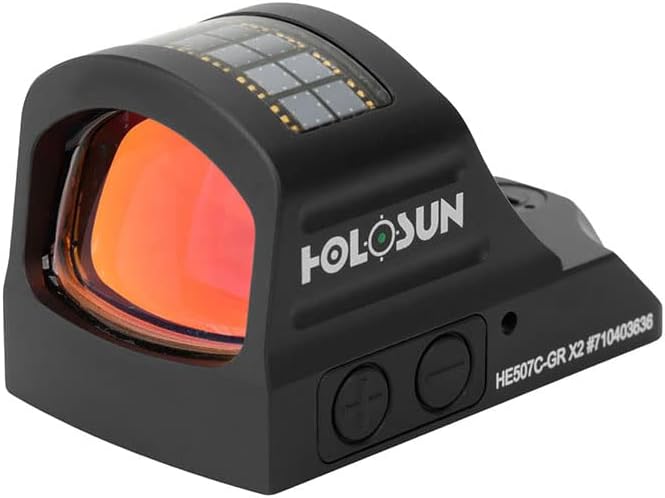
A versatile optic with advanced features at a competitive price point.
Specs:
Footprint: RMR
Window: Medium
Battery: CR1632 side-load
Reticle: 2 MOA dot + circle
Pros:
Multi-reticle system
Solar backup
Durable aluminum housing
Cons:
Slight blue lens tint
Smaller window than premium optics
My hands-on notes:
The circle-dot reticle speeds up close-range acquisition. Parallax is well controlled, though the emitter can be partially occluded by debris. Co-witness works well with suppressor-height sights.
What people say online:
Popular for budget competition setups. Users praise reliability and feature set.
Mounting clarity:
Standard RMR footprint—widely supported.
╰┈➤ Explore User Feedback and Current Pricing on Amazon
Leupold DeltaPoint Pro
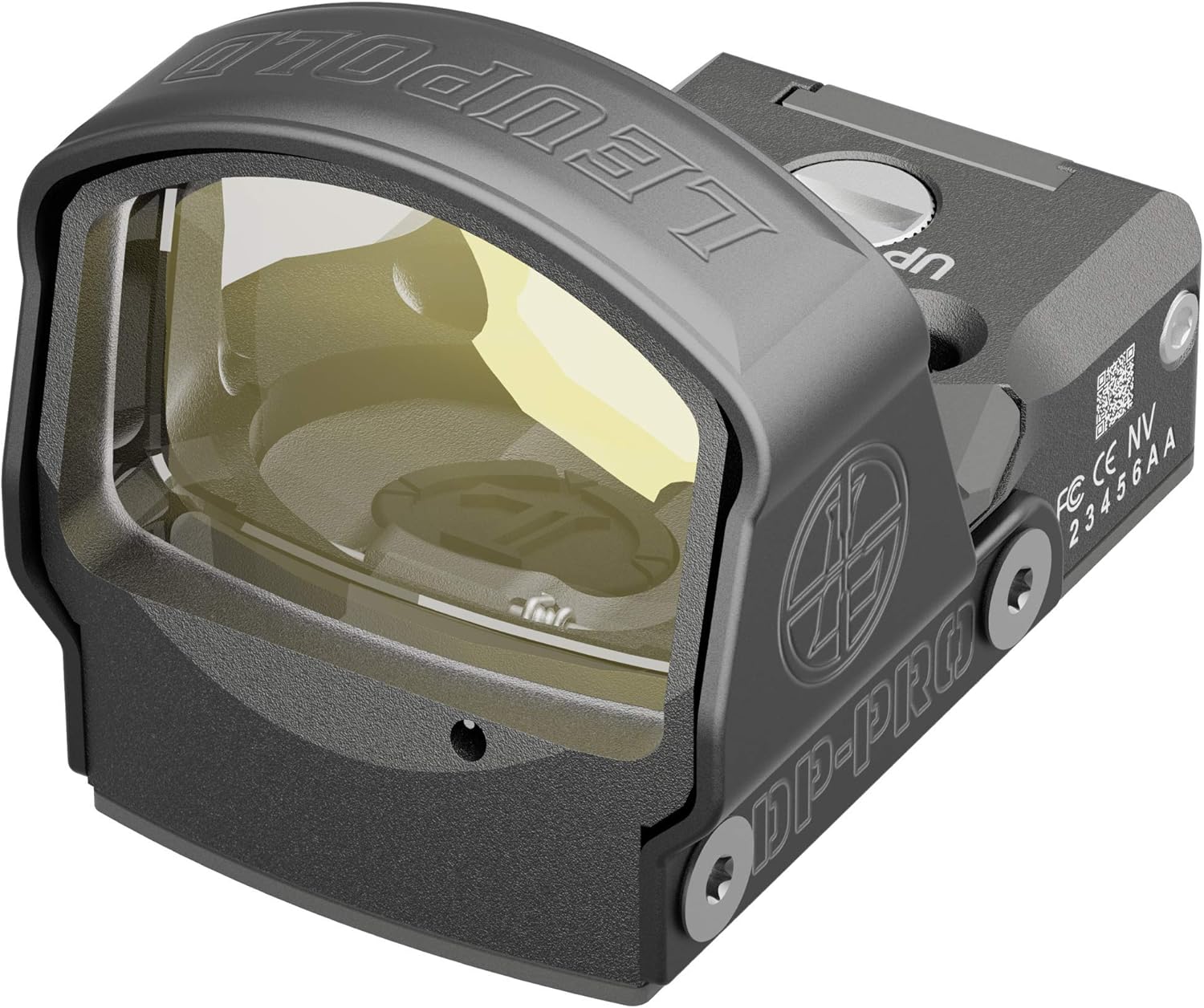
Known for its crystal-clear glass and wide window.
Specs:
Footprint: DPP
Window: Large rectangular
Battery: CR2032 top-load
Dot: 2.5 MOA
Pros:
Exceptional glass clarity
Wide viewing window
Motion sensor activation
Cons:
Requires adapter for RMR slides
Slightly higher deck height
My hands-on notes:
The glass is among the best I’ve tested—minimal tint and distortion. Parallax is negligible. The deck height affects co-witness, requiring taller irons.
What people say online:
Highly regarded for optical clarity. Some dislike mounting limitations.
Mounting clarity:
Uses DPP footprint—adapter plates often required.
╰┈➤ Explore User Feedback and Current Pricing on Amazon
Sig Sauer Romeo3
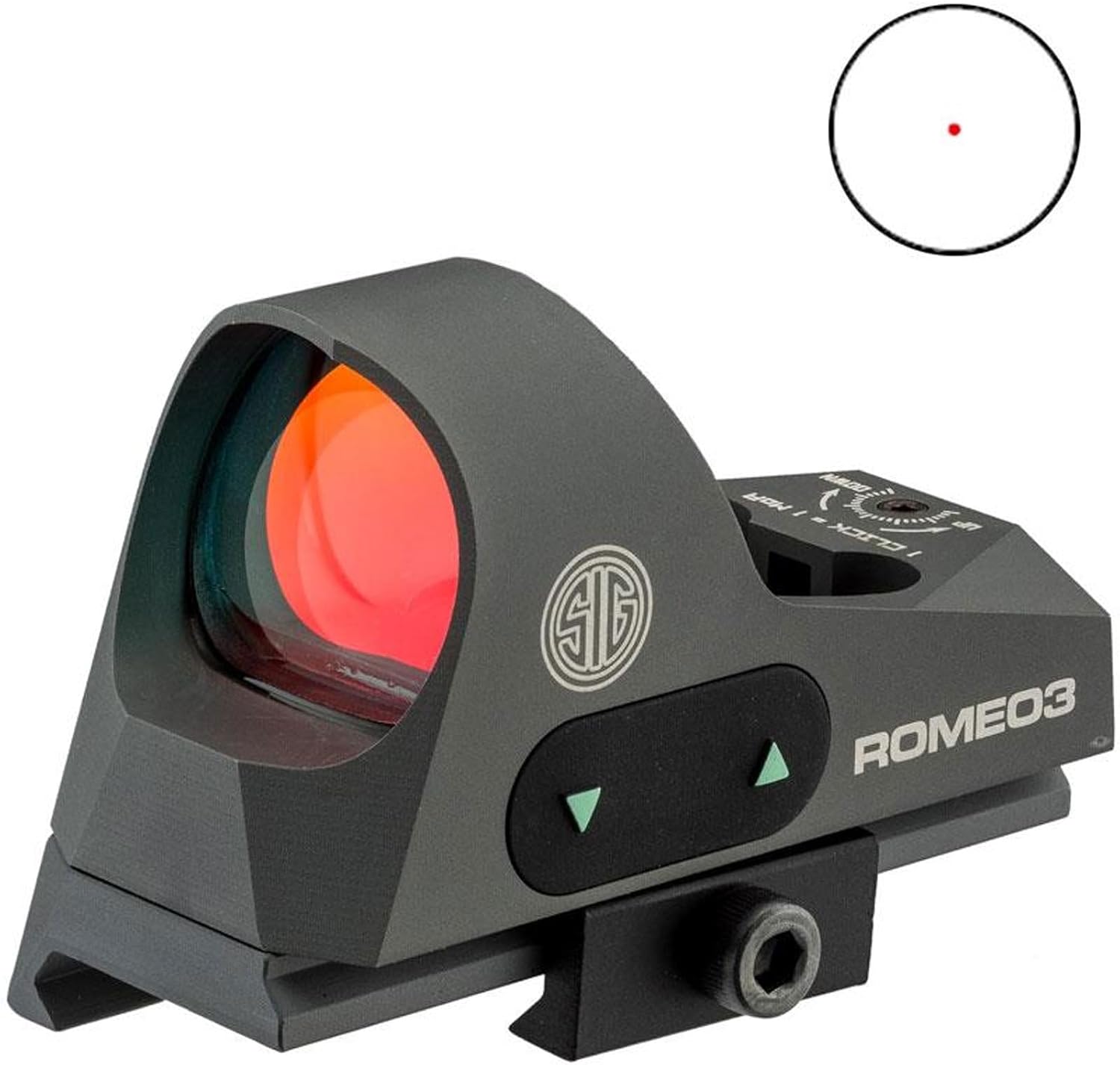
A competition-focused optic designed for race guns.
Specs:
Footprint: C-More
Window: Large
Battery: CR2032
Dot: 3 MOA
Pros:
Lightweight design
Huge window
Crisp dot
Cons:
Not duty-rated
Exposed emitter
My hands-on notes:
This optic excels in speed shooting. The large window reduces tunnel effect. Parallax is minimal but noticeable at edges. Co-witness is generally not used in IPSC Open setups.
What people say online:
Favored in Open division. Some durability concerns.
Mounting clarity:
C-More footprint—common on race mounts.
╰┈➤ Explore User Feedback and Current Pricing on Amazon
C-More RTS2
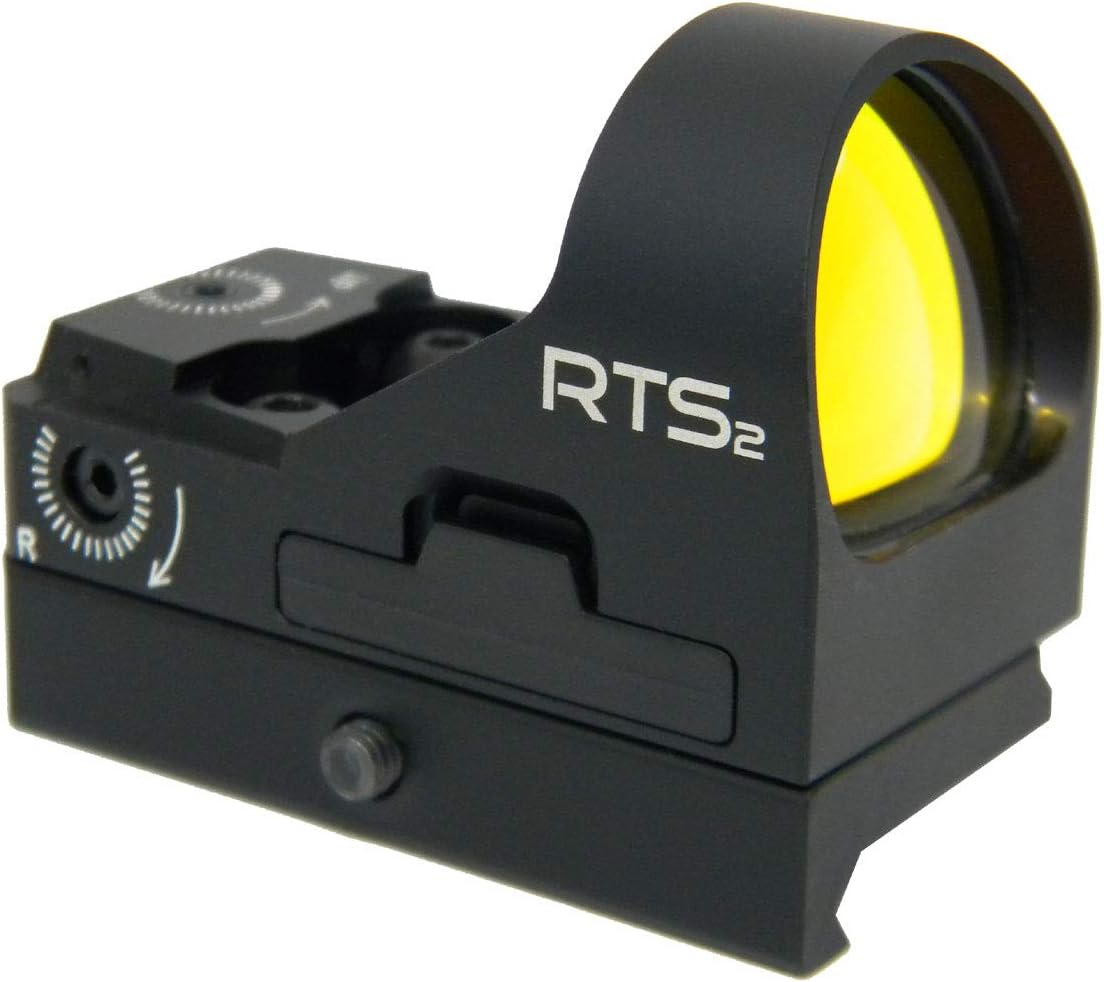
A staple in IPSC competition with a reputation for speed.
Specs:
Footprint: C-More
Window: Extra-large
Battery: CR2032
Dot: 3 / 6 MOA
Pros:
Massive window
Lightweight
Proven competition track record
Cons:
Limited sealing
Not ideal for harsh environments
My hands-on notes:
This is a pure competition optic. The window is enormous, making transitions effortless. Parallax is controlled but not as refined as newer optics. No practical co-witness.
What people say online:
Still widely used despite newer options. Known for speed.
Mounting clarity:
Direct mount on C-More pattern race mounts.
╰┈➤ Explore User Feedback and Current Pricing
Aimpoint ACRO P-2
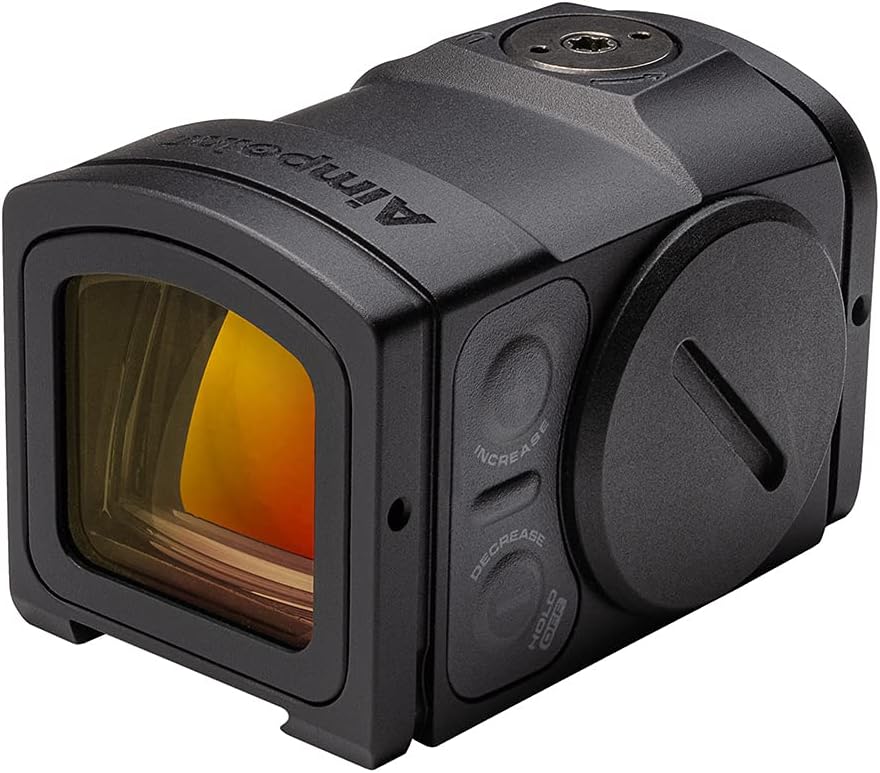
A closed-emitter optic built for extreme reliability.
Specs:
Footprint: Proprietary
Window: Small
Battery: CR2032
Dot: 3.5 MOA
Pros:
Fully enclosed emitter
Exceptional durability
Long battery life
Cons:
Smaller window
Heavier
My hands-on notes:
The enclosed design eliminates emitter occlusion—huge advantage in dusty stages. Parallax is excellent. Co-witness works with proper plates.
What people say online:
Praised for reliability, less so for competition speed.
Mounting clarity:
Requires dedicated ACRO plate.
╰┈➤ Explore User Feedback and Current Pricing on Amazon
How I Tested / Evaluation Criteria
Parallax:
I evaluated parallax by shifting my eye position across the lens while maintaining a fixed target. The best optics showed minimal dot drift even at the edges, which is critical when shooting from awkward positions.
Co-witness / Deck Height:
Deck height impacts how easily backup irons align. Lower deck optics allow natural co-witness, while taller optics require suppressor-height sights or eliminate co-witness entirely in race setups.
Durability:
I tested durability through repeated recoil cycles and simulated drops. IPSC optics don’t need military-level ruggedness, but they must handle thousands of rounds without losing zero.
Battery:
Battery life and accessibility matter. Top-load designs are superior because they allow battery changes without removing the optic, preserving zero.
Brightness Range:
I tested brightness in both bright daylight and indoor ranges. A good optic must have a visible dot in direct sunlight without blooming excessively.
Glass Quality:
Lens clarity, tint, and distortion were evaluated. IPSC shooting benefits from minimal tint and wide field of view.
Controls Ergonomics:
Button placement and tactility matter, especially with gloves. The best optics have positive, tactile clicks without accidental activation.
Mounting Ecosystem:
Compatibility with common footprints like RMR or C-More is essential. Proprietary systems limit flexibility.
How to Choose the Right Red Dot for This Gun
Choosing a competition optic requires balancing speed, reliability, and compatibility. The first factor I always consider is window size. A larger window allows faster target acquisition and easier tracking during recoil. This is why optics like the SRO and RTS2 dominate in Open division—they reduce visual constraints.
Next is reticle design. A simple dot works well for precision, but a circle-dot reticle can dramatically improve speed at close range. However, more complex reticles can clutter the sight picture at distance, so there’s a tradeoff.
Footprint compatibility is another key factor. Many competition pistols are cut for the RMR footprint, making it the most versatile option. If you’re running a dedicated race gun, C-More mounts open up more specialized optics.
Battery design also matters more than most shooters think. In competition, you don’t want to re-zero your optic mid-season. Top-loading batteries are a major advantage.
Durability is less about surviving combat and more about consistency. An optic that loses zero after 2,000 rounds is unusable, even if it’s lightweight and fast.
Finally, consider your division. In Open division, larger optics with exposed emitters dominate. In Carry Optics, durability and footprint compatibility become more important.
FAQs
1. What dot size is best for IPSC?
A 2.5–5 MOA dot is ideal. Larger dots are faster to acquire but less precise at distance.
2. Are closed emitter optics good for IPSC?
Yes, but they typically have smaller windows, which can slow transitions.
3. Do I need co-witness in IPSC?
Not usually. Most competition setups prioritize optic height and speed over backup irons.
4. Is battery life important?
Yes, but ease of replacement matters more in competition.
5. Which footprint is most common?
RMR is the most widely supported footprint for competition pistols.
Conclusion
Finding the Best Red Dot for IPSC ultimately comes down to your shooting style and division. If speed is your priority, large-window optics like the SRO or RTS2 dominate. If you want a balance of features and durability, options like the 507C or DeltaPoint Pro deliver excellent performance.