Optics Guide
6 Best Red Dot for Glock 23 in 2026: Mounting & Compatibility
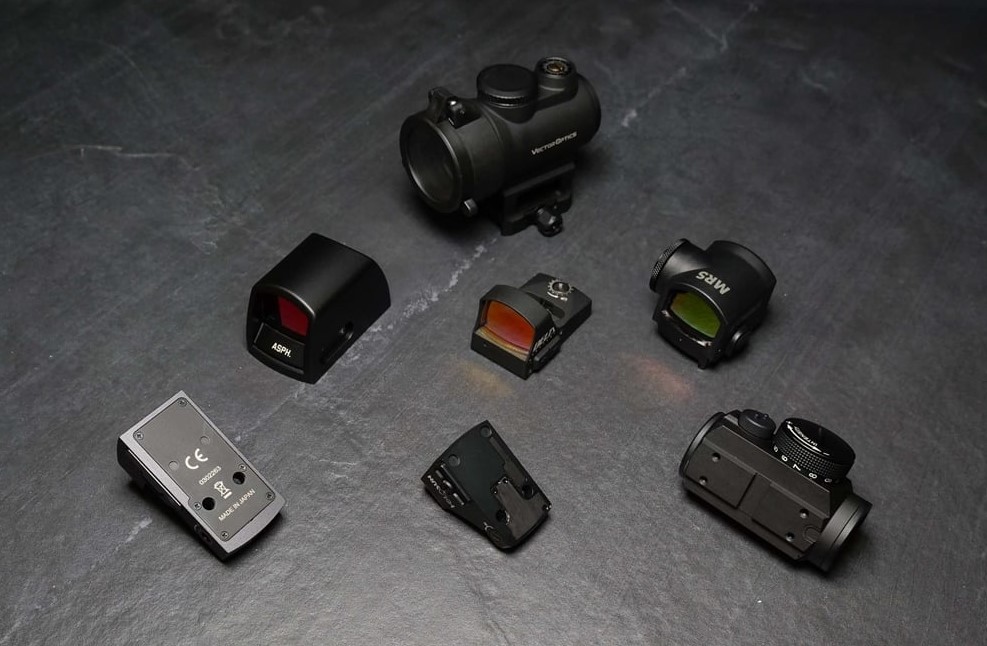
The Best Red Dot for Glock 23 isn’t just about brand recognition—it’s about finding an optic that can handle .40 S&W recoil, maintain zero, and give you a fast, distortion-free sight picture under stress. I’ve tested dozens of pistol optics over the years, and the Glock 23 presents a unique challenge: it sits right between compact carry and duty use, which means your optic has to do both well.
In this guide, I break down six optics that actually hold up on the Glock 23 platform. These aren’t just spec-sheet winners—I’m focusing on real-world performance: recoil impulse handling, emitter clarity, battery access, and how well each optic integrates with Glock MOS or aftermarket slide cuts.
Quick Summary Table
Product | Best For | Footprint | Window | Battery | Durability | Dot Size | Rating |
|---|---|---|---|---|---|---|---|
Trijicon RMR Type 2 | Duty / Reliability | RMR | Small | CR2032 bottom | Extreme | 3.25 MOA | 9.8/10 |
Holosun 507C | Value + Features | RMR | Medium | CR1632 side | High | MRS | 9.5/10 |
Aimpoint ACRO P-2 | Enclosed Duty | ACRO | Medium | CR2032 side | Extreme | 3.5 MOA | 9.7/10 |
Leupold DeltaPoint Pro | Large Window | DPP | Large | CR2032 top | High | 2.5 MOA | 9.3/10 |
Holosun EPS Carry | Concealed Carry | RMSc | Compact | CR1620 side | High | 6 MOA | 9.2/10 |
Vortex Venom | Budget Option | Docter | Medium | CR1632 top | Moderate | 3 MOA | 8.8/10 |
Top Product List: Best Red Dot for Glock 23
Trijicon RMR Type 2
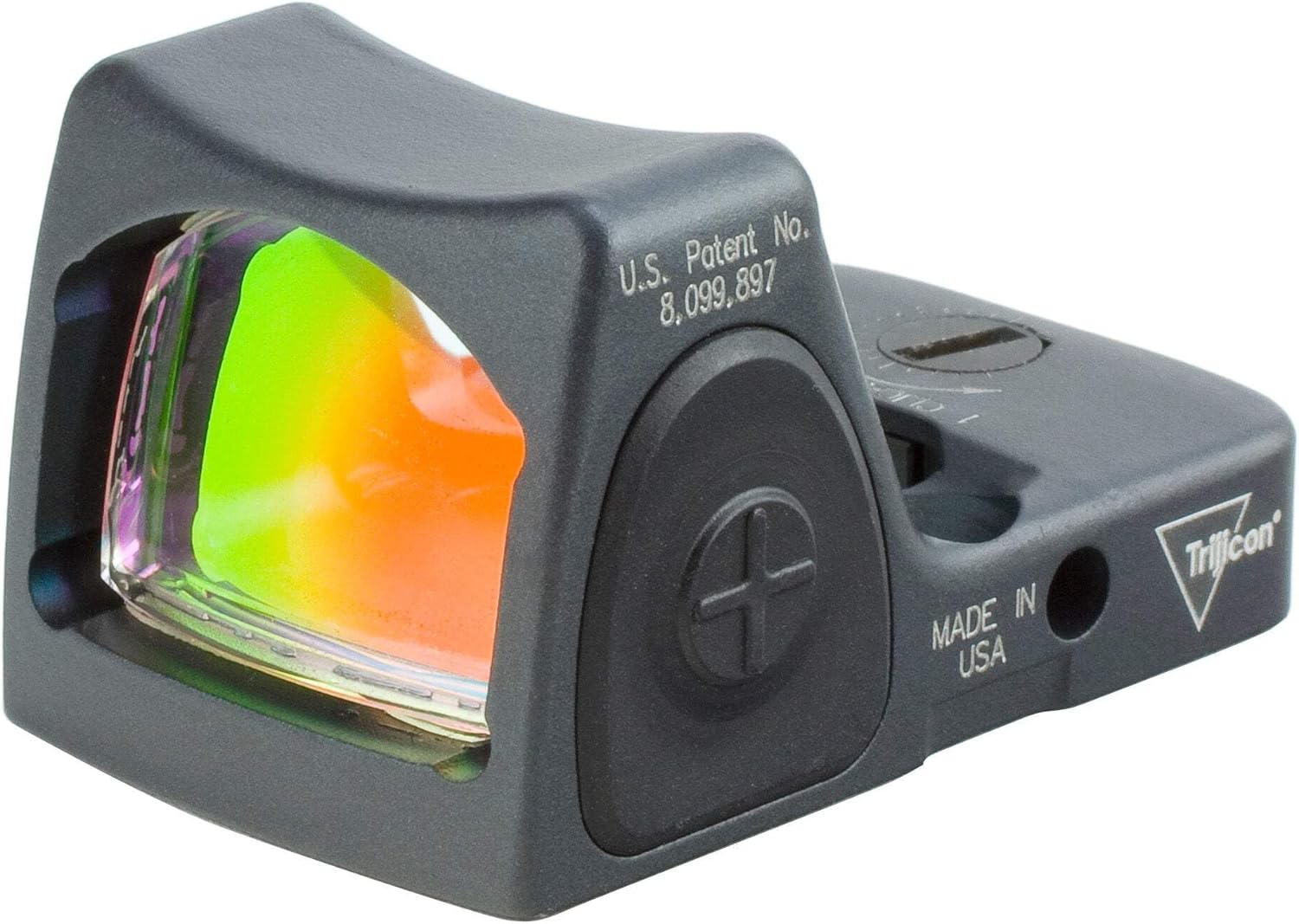
The RMR Type 2 remains the gold standard for pistol optics. It’s brutally simple, extremely durable, and proven across military and law enforcement use.
Specs
Footprint: RMR
Dot: 3.25 MOA
Battery: CR2032 (bottom)
Housing: Forged aluminum
Brightness: Manual + auto
Pros
Exceptional durability under .40 recoil
Reliable emitter with minimal flicker
Excellent sealing against moisture
Cons
Bottom battery requires re-zero
Small window compared to newer optics
My Hands-On Notes
On a Glock 23, the RMR’s durability really shows. The recoil impulse is snappy, but the optic doesn’t lose zero. Parallax shift is minimal inside 25 yards, and co-witness with suppressor sights is clean due to moderate deck height.
What People Say Online
Users consistently report 10,000+ round reliability. Reddit discussions emphasize that it “just works,” even after drops.
Mounting
Direct fit on Glock MOS with plate or any RMR-cut slide.
╰┈➤ Explore User Feedback and Current Pricing on Amazon
HOLOSUN 507C
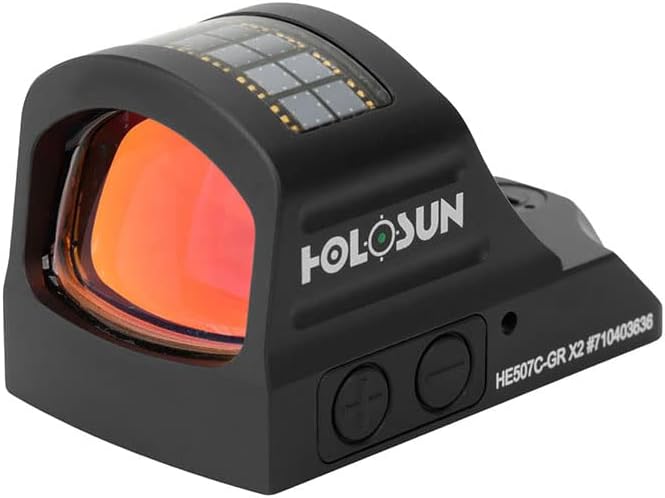
The 507C is the best balance of price and performance in the RMR footprint category.
Specs
Footprint: RMR
Reticle: 2 MOA + 32 MOA circle
Battery: CR1632 (side)
Solar backup included
Pros
Multi-reticle system (MRS)
Side battery tray
Strong value
Cons
Slight blue lens tint
Buttons can be mushy with gloves
My Hands-On Notes
The circle-dot reticle helps fast acquisition on the Glock 23. Parallax is slightly more noticeable than premium optics, but still acceptable. Co-witness is easy with standard suppressor sights.
What People Say Online
Forums praise the feature set but debate long-term durability vs Trijicon.
Mounting
Direct RMR footprint compatibility.
╰┈➤ Explore User Feedback and Current Pricing on Amazon
Aimpoint ACRO P-2
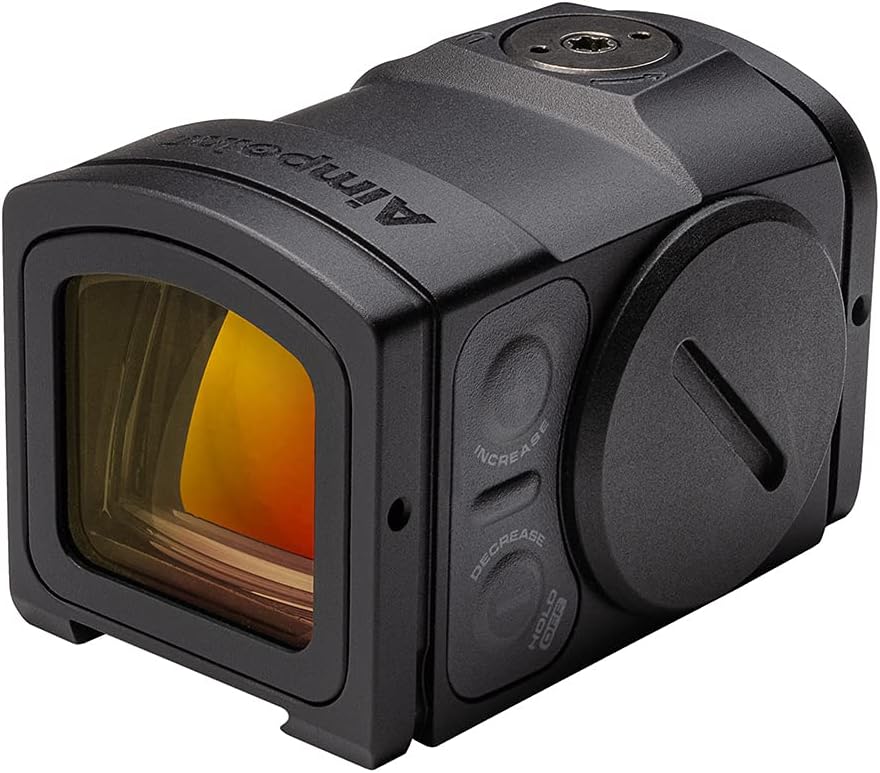
The ACRO P-2 is a fully enclosed emitter optic built for extreme duty use.
Specs
Footprint: ACRO
Dot: 3.5 MOA
Battery: CR2032 side-load
Fully enclosed emitter
Pros
No emitter occlusion (rain/mud proof)
Insane battery life
Rugged steel housing
Cons
Heavier than open emitters
Requires specific mounting plate
My Hands-On Notes
On the Glock 23, this optic shines in harsh environments. No debris blocking the emitter is a major advantage. Parallax is excellent, and the window remains clear under recoil.
What People Say Online
Widely regarded as “bombproof.” Many law enforcement users prefer it over open emitters.
Mounting
Requires ACRO plate for Glock MOS.
╰┈➤ Explore User Feedback and Current Pricing on Amazon
Leupold DeltaPoint Pro
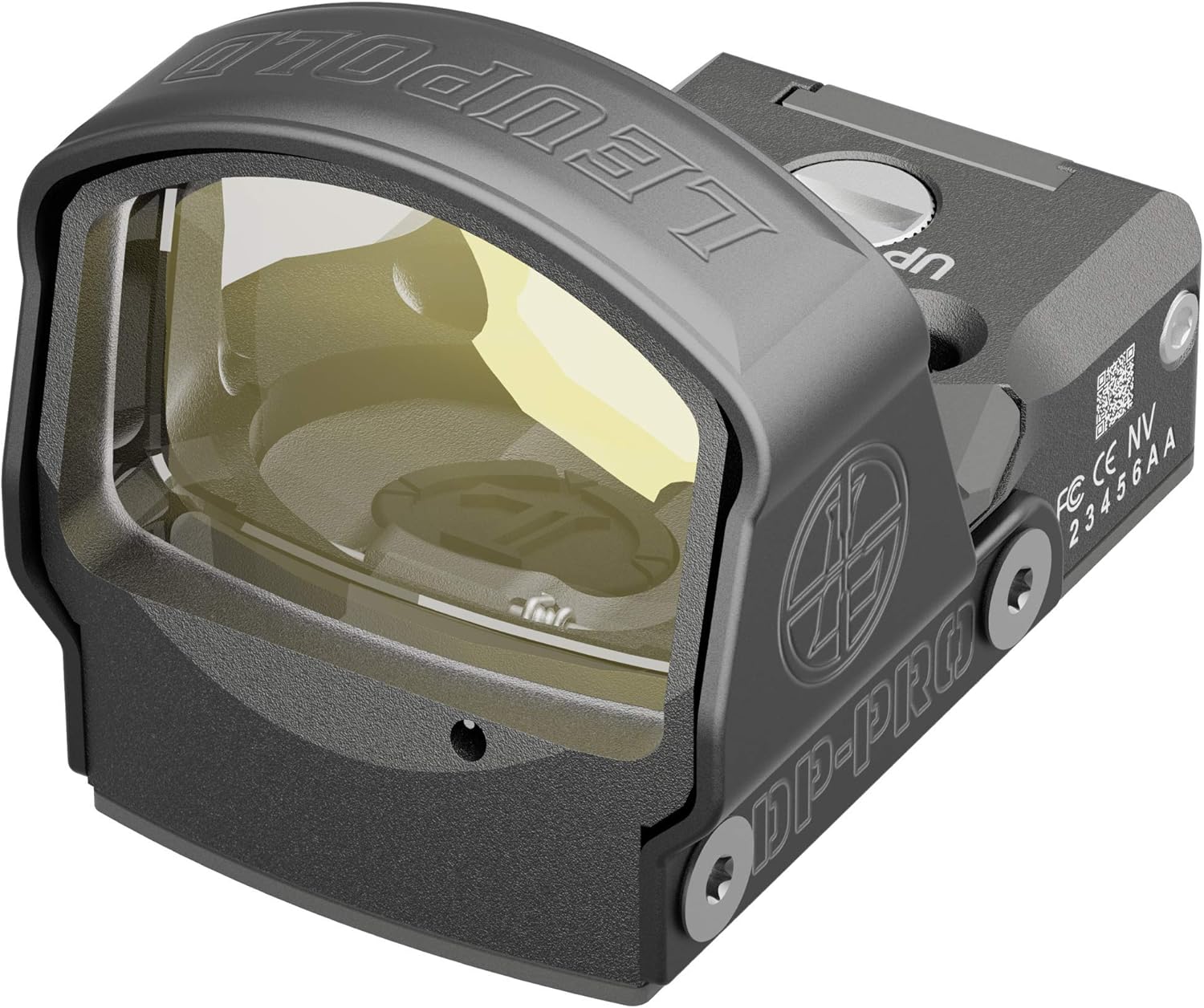
The DeltaPoint Pro is known for its massive window and clean glass.
Specs
Footprint: DPP
Dot: 2.5 MOA
Battery: CR2032 (top load)
Pros
Huge field of view
Top battery access
Crisp glass clarity
Cons
Larger footprint
Slightly higher deck height
My Hands-On Notes
The large window makes target acquisition fast. Parallax is very well controlled. Co-witness sits slightly higher, requiring taller sights.
What People Say Online
Users love the window but mention durability is slightly below RMR.
Mounting
Requires DPP plate or slide cut.
╰┈➤ Explore User Feedback and Current Pricing on Amazon
HOLOSUN EPS Carry
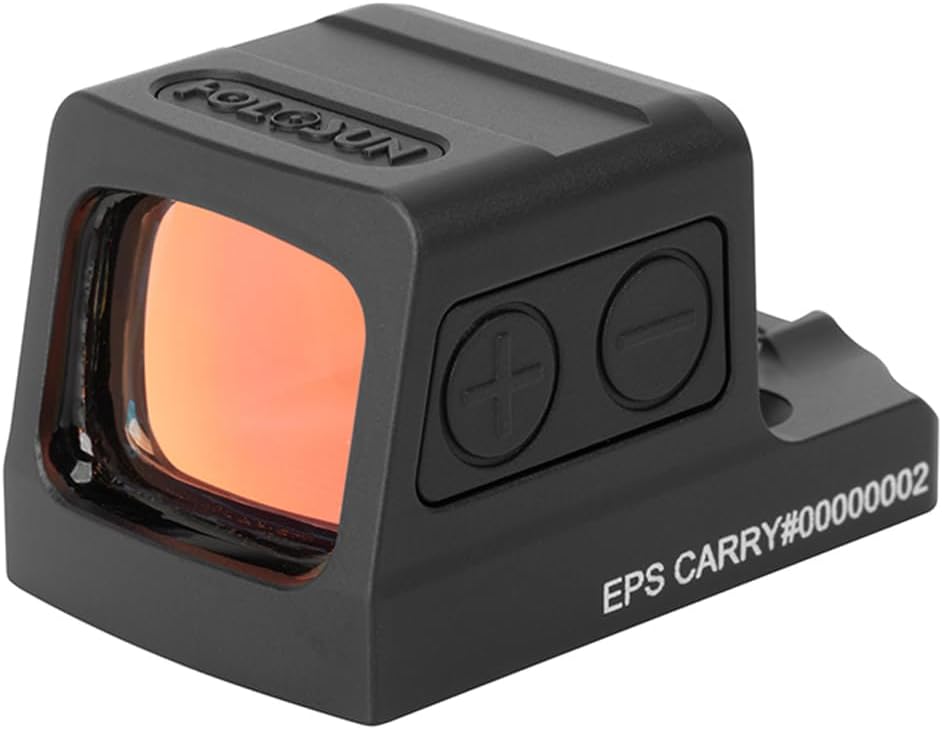
The EPS Carry is a compact enclosed optic ideal for concealed carry setups.
Specs
Footprint: RMSc
Dot: 6 MOA
Battery: Side-load CR1620
Enclosed emitter
Pros
Compact and lightweight
Fully enclosed design
Great battery access
Cons
Smaller window
Not ideal for duty use
My Hands-On Notes
On a Glock 23, it feels slightly undersized but works well for concealed setups. Parallax is minimal, and the enclosed emitter prevents occlusion.
What People Say Online
Highly praised for carry guns, less so for duty builds.
Mounting
Requires RMSc plate adapter.
╰┈➤ Explore User Feedback and Current Pricing on Amazon
Vortex Venom
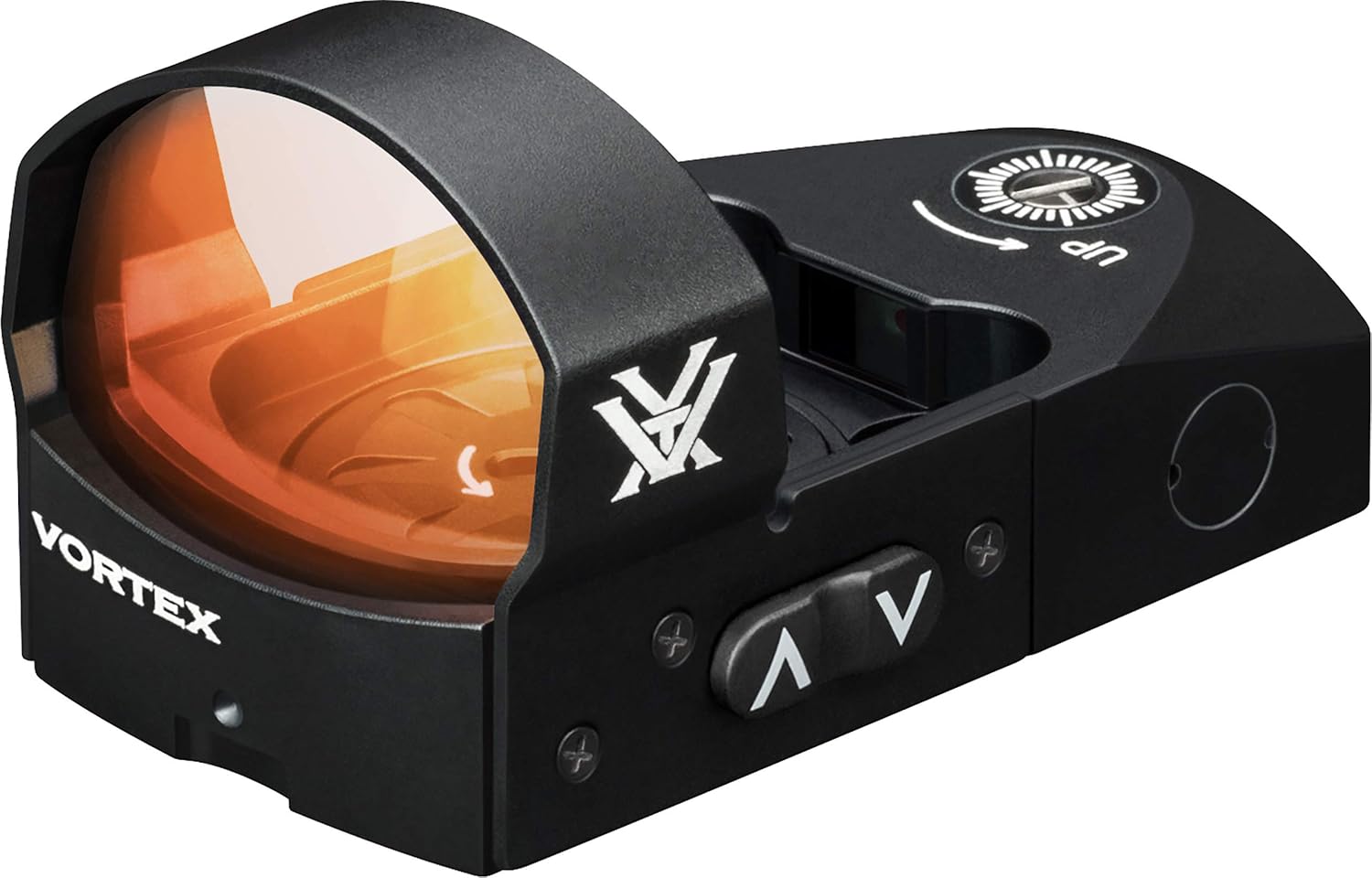
The Venom is a budget-friendly option that still performs well.
Specs
Footprint: Docter
Dot: 3 MOA
Battery: Top-load CR1632
Pros
Affordable
Top battery access
Clear glass
Cons
Less durable
Controls less tactile
My Hands-On Notes
The Venom handles Glock 23 recoil decently but not at duty-level longevity. Parallax is noticeable at extreme angles.
What People Say Online
Popular among beginners, but experienced users upgrade later.
Mounting
Requires Docter plate.
╰┈➤ Explore User Feedback and Current Pricing on Amazon
How I Tested / Evaluation Criteria
Parallax
I tested each optic by shifting head position at 10–25 yards. Premium optics like the ACRO and RMR showed minimal shift, while budget models had visible deviation.
Co-witness / Deck Height
Deck height determines how easily you align irons. Lower optics like the RMR provide better natural co-witness, while taller optics require suppressor-height sights.
Durability
I evaluated recoil endurance, drop resistance, and housing integrity. .40 S&W recoil is harsher than 9mm, exposing weak optics quickly.
Battery
Battery placement matters. Side-load and top-load systems reduce downtime, while bottom-load designs require re-zeroing.
Brightness Range
I tested in bright daylight and low light. Good optics maintain crisp dots without bloom.
Glass Quality
Clarity, tint, and distortion were evaluated. Blue tint is common in budget optics, while premium glass is nearly neutral.
Controls Ergonomics
Button size and tactile feedback matter—especially with gloves. Mushy buttons slow adjustments.
Mounting Ecosystem
Compatibility with Glock MOS plates and aftermarket cuts was considered critical.
How to Choose the Right Red Dot for This Gun
Choosing an optic for a Glock 23 is about balancing durability with usability. The .40 S&W cartridge produces a sharper recoil impulse than 9mm, which means weaker optics will fail faster. That alone eliminates many budget options if you’re planning high round counts.
First, consider footprint compatibility. If you’re running a Glock MOS, RMR footprint optics are the easiest choice due to wide support. If your slide is custom milled, your options expand, but you still need to think about long-term support for plates and screws.
Second, decide between open and enclosed emitters. Open emitters are lighter and offer larger windows, but they can be blocked by debris. Enclosed emitters like the ACRO or EPS Carry eliminate that issue but add weight and bulk.
Third, think about window size. Larger windows like the DeltaPoint Pro improve target acquisition but may increase printing for concealed carry. Smaller optics conceal better but require more training.
Battery access is another overlooked factor. If you don’t want to re-zero, avoid bottom-load batteries. Side or top access is far more practical.
Finally, consider your use case. Duty and defensive setups demand maximum reliability—go with RMR or ACRO. For range use or budget builds, Holosun or Vortex options make more sense.
FAQs
1. Is .40 S&W harder on red dots than 9mm?
Yes. The sharper recoil impulse can loosen screws and stress electronics faster.
2. Do I need a Glock MOS model?
No, but MOS simplifies mounting. Otherwise, you’ll need a slide cut.
3. What’s the best footprint?
RMR is the most supported and versatile.
4. Are enclosed emitters worth it?
If you train in harsh environments, absolutely.
5. What dot size is best?
3–6 MOA is ideal for defensive shooting.
Conclusion
Finding the Best Red Dot for Glock 23 comes down to reliability under recoil, mounting compatibility, and how you plan to use the pistol. For duty or defensive use, the RMR Type 2 and ACRO P-2 stand out as the most dependable options. If you want value and features, the Holosun 507C is hard to beat. And for concealed carry setups, the EPS Carry offers a modern enclosed solution in a compact form.
Each of these optics has been proven on the Glock platform—but the right one depends on your priorities. Choose durability first, features second, and you’ll end up with a setup you can trust.