Optics Guide
6 Co-Witness Red Dots in 2026: Mounting & Compatibility
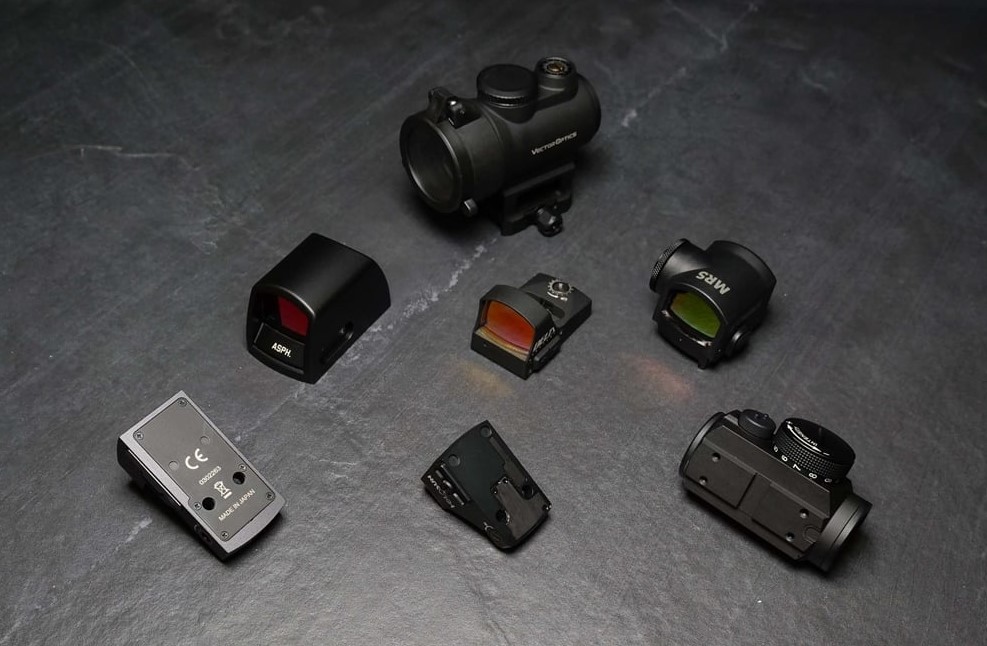
Best Red Dot for Co-Witness depends less on brand hype and more on sight height, deck height, footprint, backup iron setup, and whether the optic is going on a rifle, PCC, shotgun, or pistol.
I prioritize optics that make mounting predictable: either they ship with a usable co-witness mount, use a mature footprint, or have enough aftermarket support to solve height problems cleanly.
For rifles, lower 1/3 co-witness is usually faster and less cluttered. For pistols, the real question is whether standard, optic-height, or suppressor-height irons will still appear through the window. Here are the six I would shortlist for 2026.
Product | Best For | Footprint | Window | Battery | Durability | Dot Size | Rating |
|---|---|---|---|---|---|---|---|
Aimpoint Duty RDS | Hard-use AR/PCC | Micro | 20mm tube | CR2032 | 80 ft submersible | 2 MOA | 9.5 |
Holosun AEMS | Compact rifle optic | AEMS | Large enclosed | CR2032 | Enclosed emitter | 2 MOA / MRS | 9.3 |
EOTECH EXPS3 | NV-ready carbines | Picatinny | Holographic | CR123 | 10 m water resistant | 68/1 MOA | 9.2 |
Sig Sauer Romeo5 | Budget co-witness | Micro | 20mm tube | CR2032 | IPX7 | 2 MOA | 8.8 |
Trijicon RMR Type 2 | Pistols | RMR | Open reflex | CR2032 | Forged housing | 3.25 MOA | 9.1 |
Holosun 507C | RMR-cut pistols | RMR | Open reflex | CR1632 | 7075 aluminum | 2 MOA / MRS | 9.0 |
Top Product List: Best Red Dot for Co-Witness
Aimpoint Duty RDS — best duty-grade lower-third rifle setup
Holosun AEMS — best compact enclosed rifle optic
EOTECH EXPS3 — best holographic lower-third option
Sig Sauer Romeo5 — best value AR co-witness optic
Trijicon RMR Type 2 — best pistol co-witness optic
Holosun 507C — best pistol value with RMR compatibility
Aimpoint Duty RDS
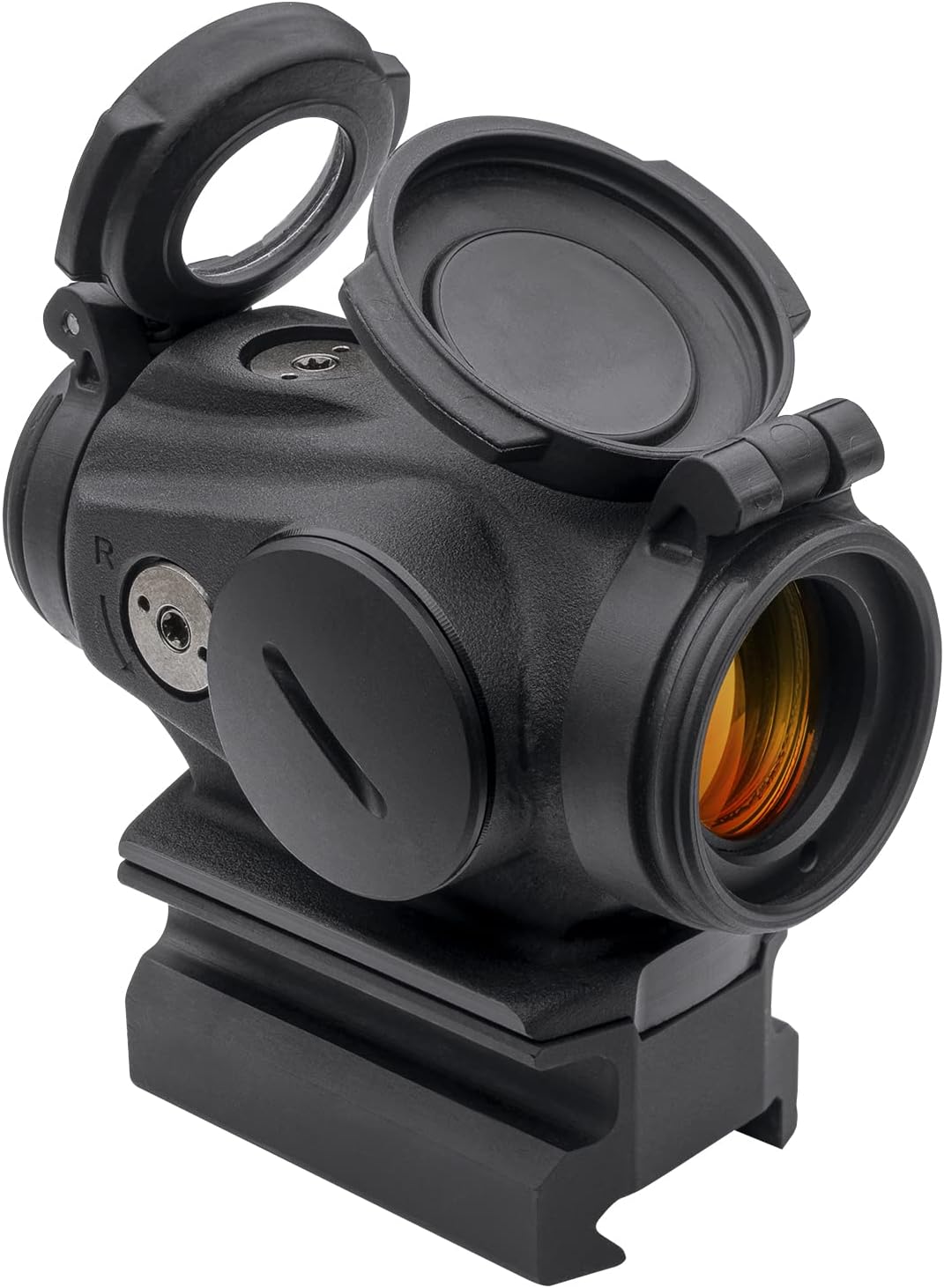
The Duty RDS is my safest pick for a serious AR or PCC because it uses the proven Aimpoint Micro mounting ecosystem and keeps the window uncluttered. Aimpoint lists glove-friendly digital buttons, shock resistance, and submersion to 80 feet, which fits its law-enforcement intent. (Aimpoint)
Specs
2 MOA dot
CR2032 battery
Micro-style footprint
39mm factory mount
NV-compatible settings
Pros
Excellent mount ecosystem
Crisp daylight dot
Rugged sealed tube
Buttons work well with gloves
Cons
Factory height can confuse new buyers
Higher deck than some Micro optics
Premium price
My hands-on notes: I like the Duty RDS most on a lower-third rifle setup, but I pay close attention to mount math. Because the optic body sits taller than a T-2, some “absolute” Micro mounts behave closer to lower-third height. Parallax shift is controlled enough for defensive distances, and the tube gives less window distortion than many budget 20mm dots. Lens tint is noticeable but not distracting.
What people say online: Forum users generally praise the optic but often debate its factory height and whether an aftermarket mount is needed for a perfect co-witness. Reddit discussions specifically call out the unusual OEM mount height. (Reddit)
Mounting clarity: Direct to Picatinny with included mount; Micro-footprint mounts expand options.
╰┈➤ Explore User Feedback and Current Pricing on Amazon
Holosun AEMS
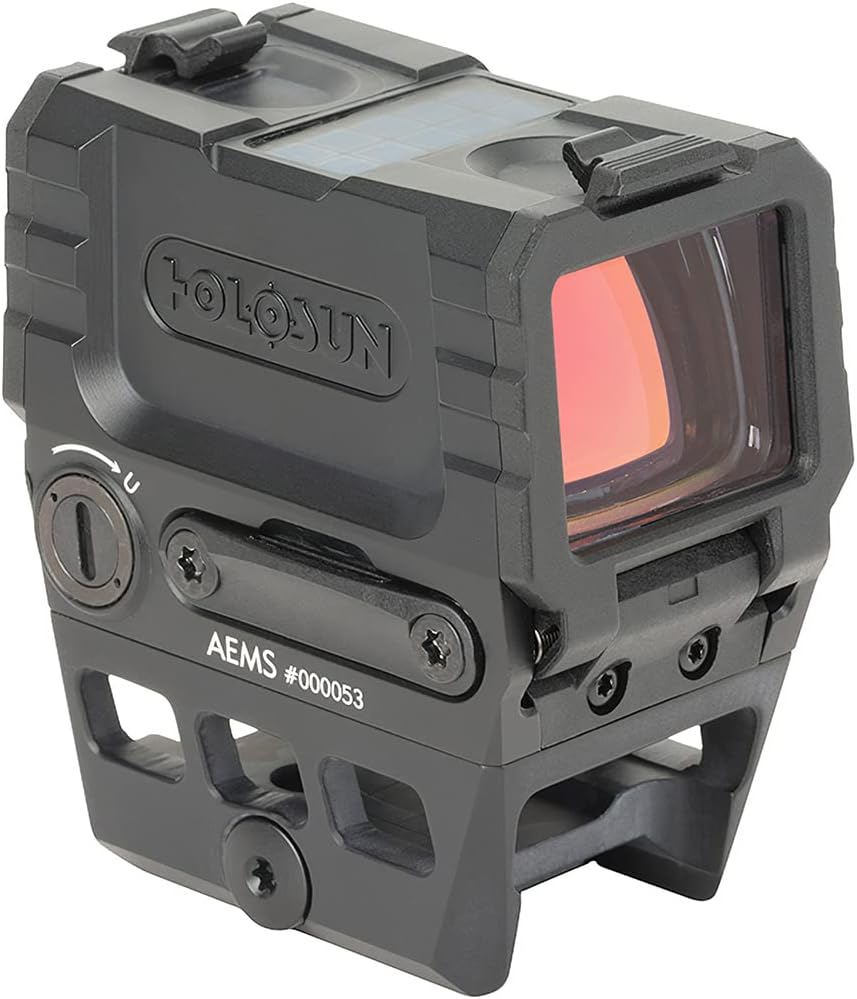
The AEMS is the compact enclosed optic I recommend when someone wants a bigger sight picture than a Micro tube without jumping to a full-size holographic sight. It ships in configurations that support lower-third co-witness, and aftermarket mounts are available in absolute, lower 1/3, 1.93-inch, and taller NV heights. (ADM Manufacturing)
Specs
2 MOA dot or multi-reticle system
CR2032 battery
Enclosed emitter
AEMS footprint
Shake Awake
Pros
Big window for its size
Enclosed emitter resists rain and debris
Good brightness range
Strong mount support
Cons
Proprietary footprint
More visible housing than a tube dot
Flip caps can add clutter
My hands-on notes: The AEMS gives a noticeably open view while keeping the emitter protected. I see mild lens tint and slight edge distortion if I mount it far forward, but the center is clean. Button tactility is easy with gloves, and the battery tray design avoids removing the optic. Parallax is good for a compact reflex, though I still confirm zero from awkward positions.
What people say online: Shooters like the window-to-size ratio and enclosed design. The common criticism is that the footprint is not as universal as Aimpoint Micro, so mount availability matters before buying.
Mounting clarity: Direct to Picatinny with the supplied mount. Use AEMS-specific mounts for absolute, lower-third, 1.93-inch, or NV-height setups.
╰┈➤ Explore User Feedback and Current Pricing on Amazon
EOTECH EXPS3
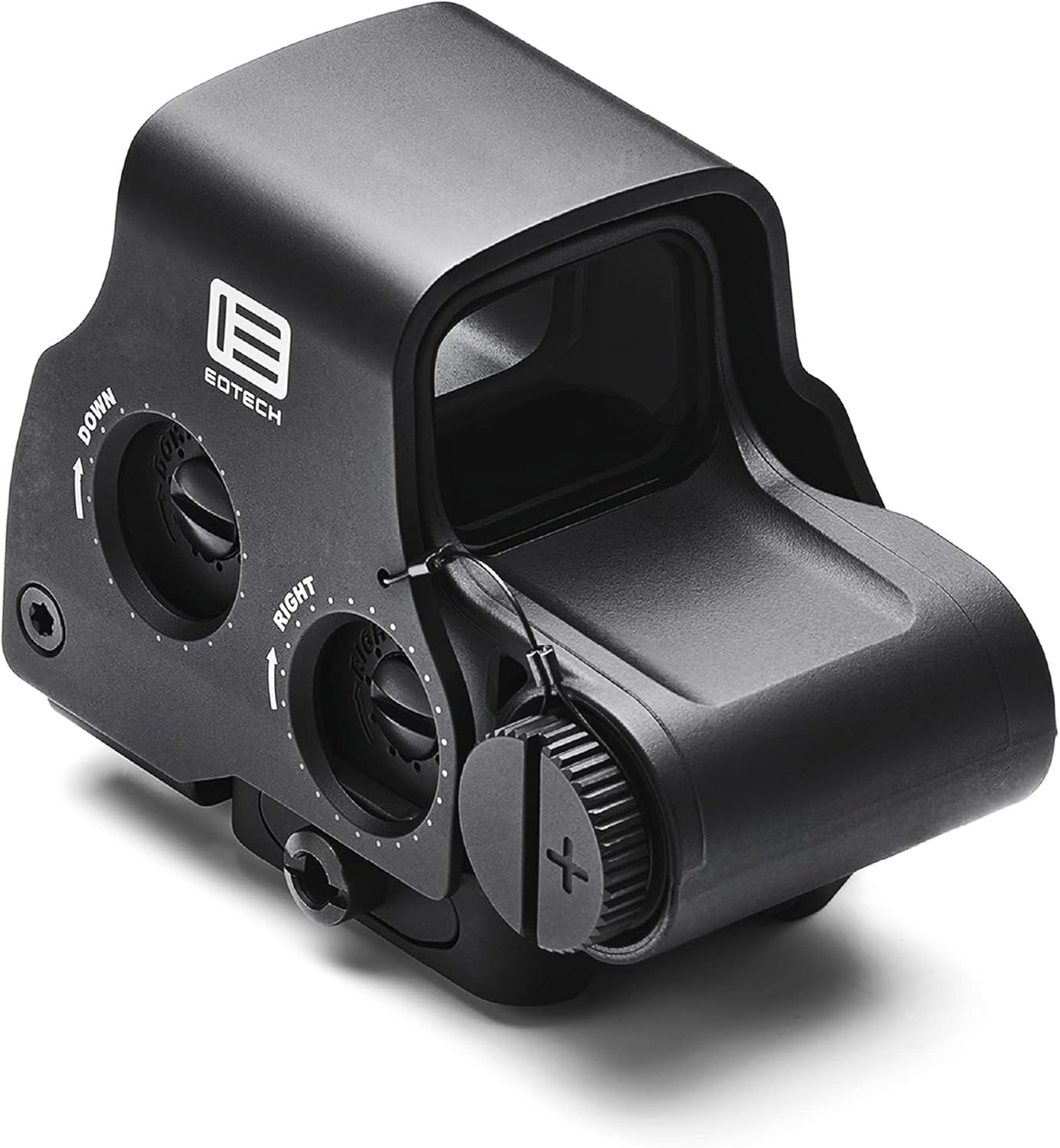
The EXPS3 is the co-witness holographic sight I choose for night vision, fast close-range work, and users who prefer a large rectangular window. EOTECH specifies a raised QD base for lower 1/3 iron-sight co-witness, plus night-vision compatibility. (EOTECH)
Specs
68 MOA ring with 1 MOA center dot
CR123 battery
Integrated QD Picatinny mount
Lower-third height
NV-compatible settings
Pros
Excellent window speed
True lower-third setup out of the box
Strong NV support
Reticle is fast up close
Cons
Shorter battery life than LED dots
Heavier than micro red dots
More rail space required
My hands-on notes: The EXPS3 is fast because the window feels wide and the reticle is easy to pick up under recoil. I see less tube effect than with Micro-style optics, but the rectangular housing is bulkier. Controls are glove-friendly, though side buttons can be crowded with some magnifiers. Parallax performance is one of the EXPS3’s strengths, especially when shooting from imperfect cheek welds.
What people say online: Reviewers and users consistently frame the EXPS line as the lower-third alternative to the XPS line, with the tradeoff being size and battery consumption. (The Armory Life)
Mounting clarity: Direct Picatinny mount. No plate needed. It is already set up for lower-third co-witness on standard AR-height irons.
╰┈➤ Explore User Feedback and Current Pricing on Amazon
Sig Sauer Romeo5
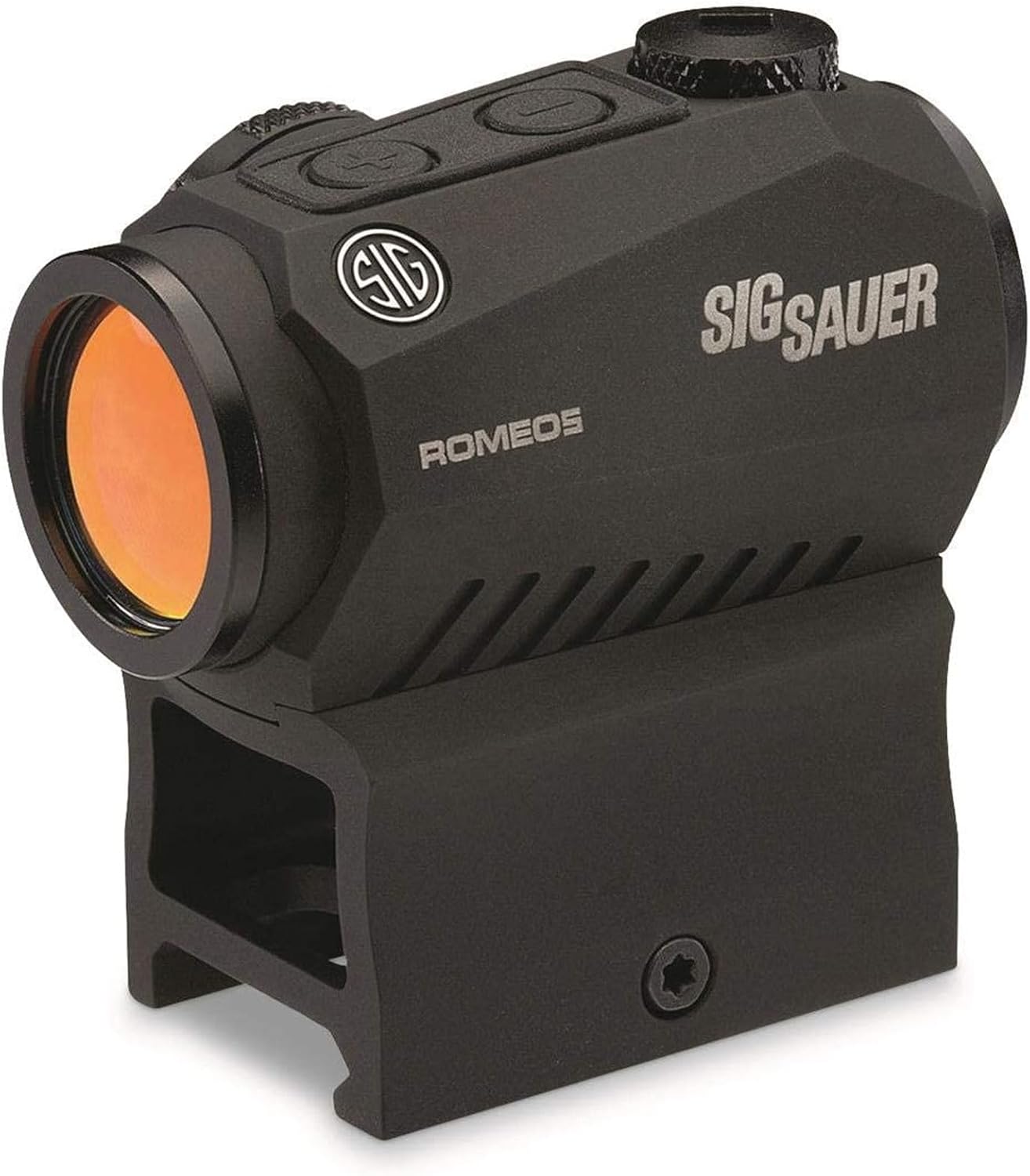
The Romeo5 remains the value pick because it gives new AR owners a simple path to co-witness without spending duty-optic money. It typically includes riser options, uses the common Micro-style ecosystem, and works well on rifles, PCCs, and training carbines.
Specs
2 MOA dot
CR2032 battery
Motion-activated illumination
Micro-style footprint
Common riser compatibility
Pros
Excellent price-to-performance ratio
Easy to mount
Lightweight
Good battery life
Cons
Not as refined as Aimpoint
More blue-green lens tint
Buttons are smaller with gloves
My hands-on notes: The Romeo5 is not the optic I would choose for a patrol rifle, but it is very good for budget co-witness builds. The dot is usable in daylight, and the recoil impulse from 5.56, 9mm PCC, and light shotgun loads does not usually expose problems when mounted correctly. I notice more tint and occasional emitter glare than on premium optics. Parallax shift is acceptable inside typical carbine distances but less forgiving than higher-end dots.
What people say online: Users like the low cost, common mount pattern, and simple controls. The main complaints are inconsistent included mount quality and less premium glass.
Mounting clarity: Direct Picatinny with included riser. It can use many Micro-pattern mounts, which makes absolute or lower-third co-witness easy to tune.
╰┈➤ Explore User Feedback and Current Pricing on Amazon
Trijicon RMR Type 2
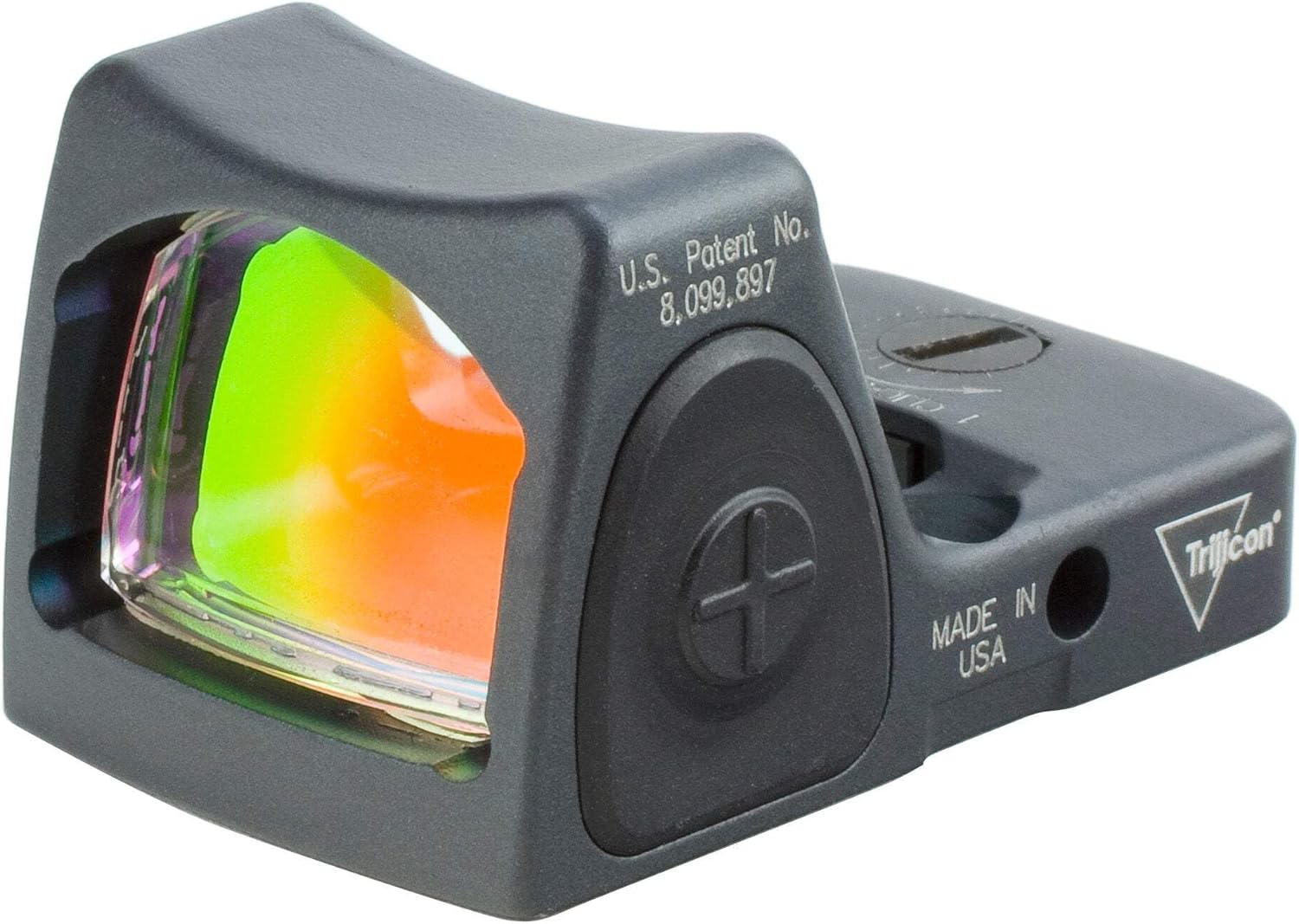
The RMR Type 2 is still the reference point for pistol co-witness because the footprint is everywhere, the housing is extremely tough, and iron-sight planning is predictable. Trijicon notes that the Type 2 shares the same physical dimensions and mounting footprint as the original RMR. (Trijicon)
Specs
3.25 MOA common dot option
CR2032 battery
RMR footprint
Forged aluminum housing
Adjustable LED models available
Pros
Excellent durability
Huge plate and slide support
Proven recoil handling
Good concealed-carry profile
Cons
Battery underneath requires optic removal
Smaller window than newer competition dots
Blue tint is visible
My hands-on notes: The RMR is not the easiest dot to track, but it is one of the hardest to kill. I like it on duty pistols where suppressor-height irons can sit low in the window without dominating the sight picture. The lens has noticeable tint and mild distortion, but the dot remains clean. Emitter occlusion can happen with mud, lint, or rain because it is an open-emitter design.
What people say online: The consensus is durability first, convenience second. Many shooters accept the bottom battery because the optic holds zero and has broad holster and plate compatibility.
Mounting clarity: Direct on RMR-cut slides. Plate required for MOS, CORE, PDP, P320, and other modular systems unless cut specifically for RMR. Footprint references identify the RMR pattern as one of the most common pistol standards. (Optics Trade)
╰┈➤ Explore User Feedback and Current Pricing on Amazon
Holosun 507C
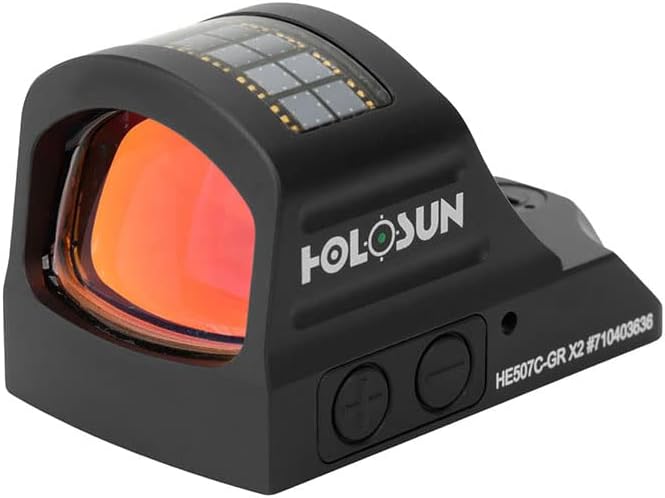
The 507C is the practical RMR-footprint alternative for pistol owners who want easier battery access, multiple reticles, and strong value. It is especially useful when co-witnessing with suppressor-height sights because the window is familiar, the deck height is manageable, and mounting plates are widely available.
Specs
2 MOA dot / 32 MOA circle
CR1632 side battery tray
RMR footprint
Solar backup on many models
Shake Awake
Pros
RMR footprint compatibility
Side battery tray
Flexible reticle
Strong value
Cons
Open emitter can collect debris
Buttons are small with gloves
Reticle ring can clutter irons
My hands-on notes: I like the 507C when a shooter wants a pistol optic that is easier to live with than an RMR. The side battery tray is the real advantage because it avoids removing the optic for battery changes. Lens tint is moderate, window distortion is low enough for carry use, and the recoil impulse on 9mm duty pistols is handled well when screws are torqued correctly. With gloves, the buttons are usable but not generous.
What people say online: Owners usually praise the reticle options and battery access. The most common caution is to confirm plate fit and screw length before blaming the optic.
Mounting clarity: Direct on RMR cuts. Plate required for most optic-ready pistols unless the slide is cut for RMR. OpticsPlanet notes that adapter plates are often necessary because handgun optic footprints are not universal. (OpticsPlanet)
╰┈➤ Explore User Feedback and Current Pricing on Amazon
How I Tested / Evaluation Criteria
Parallax: I check dot movement from centered, high, low, left, and right head positions at close and intermediate distances. No red dot is perfectly parallax-free at every distance, so I care more about predictable shift than marketing language.
Co-witness / deck height: On rifles, I separate absolute, lower-third, 1.93-inch, and NV-height use cases. On pistols, I look at deck height, rear-sight dovetail position, and whether backup irons are visible without blocking too much window.
Durability: I judge sealing, battery compartment security, mount tension, and recoil behavior. Enclosed emitters get an advantage in rain and debris, but open emitters can still be reliable when the housing is proven.
Battery: I prefer side or top battery access when possible. Bottom batteries are acceptable only when the optic has exceptional durability or very long runtime.
Brightness range: A good co-witness optic must get bright enough for harsh sun and dim enough around white light or night vision. Clicks should be deliberate, not mushy.
Glass quality: I look for tint, fisheye, edge distortion, emitter reflection, and bloom. A small amount of tint is acceptable if the dot remains crisp and the target view stays natural.
Controls ergonomics: Buttons should work with gloves and under stress. Rotary dials are fast, but protected push buttons are often better against accidental changes.
Mounting ecosystem: Footprint matters as much as glass. Aimpoint Micro and RMR patterns win because mounts, plates, risers, and replacement hardware are easy to source.
How to Choose the Right Red Dot for This Gun
Start with the firearm, not the optic. For an AR-15, PCC, or defensive shotgun with rail-mounted irons, decide whether you want absolute co-witness or lower-third co-witness. Absolute puts the dot directly in line with the irons, which feels familiar but can clutter the window. Lower-third keeps irons lower in the view, giving a cleaner dot picture while preserving backup capability.
For a rifle that may use night vision, do not obsess over traditional co-witness. A 1.93-inch or taller mount often works better with a heads-up stance, gas mask, helmet, or passive aiming. In that case, irons may no longer co-witness normally, and that is acceptable if the setup matches the mission.
For pistols, the issue is different. You need to know the slide cut, optic footprint, plate thickness, deck height, and iron-sight height. An RMR-cut slide with a low-mounted optic may co-witness with lower suppressor-height sights. A thicker adapter plate may require taller irons. A compact carry pistol can become awkward if the rear iron blocks too much of the window.
Open emitters are lighter and common on pistols, but enclosed emitters are better when rain, lint, mud, or duty use matter. For rifles, enclosed tube or box optics usually make more sense because size penalties are smaller.
Finally, confirm screw length, torque spec, thread locker guidance, and whether your rear sight remains usable. Most co-witness failures are not optic failures; they are height, plate, or mounting-system mismatches.
FAQs
Is lower-third co-witness better than absolute?
For most rifles, yes. It gives a cleaner window while keeping irons usable.
Can pistol red dots co-witness with factory sights?
Sometimes, but many pistols need optic-height or suppressor-height irons.
Do enclosed emitters co-witness differently?
Not inherently. Deck height and mount height matter more than emitter style.
Is an RMR footprint the safest pistol choice?
It is one of the safest because slide cuts, plates, and accessories are widely available.
Should I zero the dot through the irons?
No. Zero the optic independently, then confirm the irons separately.
Conclusion
Best Red Dot for Co-Witness comes down to mounting compatibility first and optic preference second; for rifles I would start with the Aimpoint Duty RDS or EOTECH EXPS3, while pistol users should begin with the RMR Type 2 or Holosun 507C.